
Table of contents
Get insights delivered straight into your inbox every week!
Summarize with

10 Best ABM Tools Recommended by Top 1% in 2026

Finding the right ABM tool is harder than it should be.

Not because there aren’t enough options, but because everything starts to look the same after a point.

Every tool claims to help with targeting, engagement, and pipeline, but it’s not clear which ones actually fit your way of working.

If you’re reading this, you’re likely trying to make a practical decision.

Maybe you want to:

  • target better accounts
  • Run more focused campaigns
  • or simply stop wasting time on tools that don’t deliver

And that’s where most lists fall short: they give you options, but not clarity.

So instead of listing everything, I’ve kept this simple.

This is a curated list of ABM tools that are actually used in real workflows, where teams are working with specific accounts and trying to move them forward, not just generate surface-level engagement.

As you go through this, don’t try to find one “perfect” tool.

Think about what you need right now:

  • better targeting
  • better campaign execution
  • or better engagement with your accounts

That’s how you’ll get real value from this list.
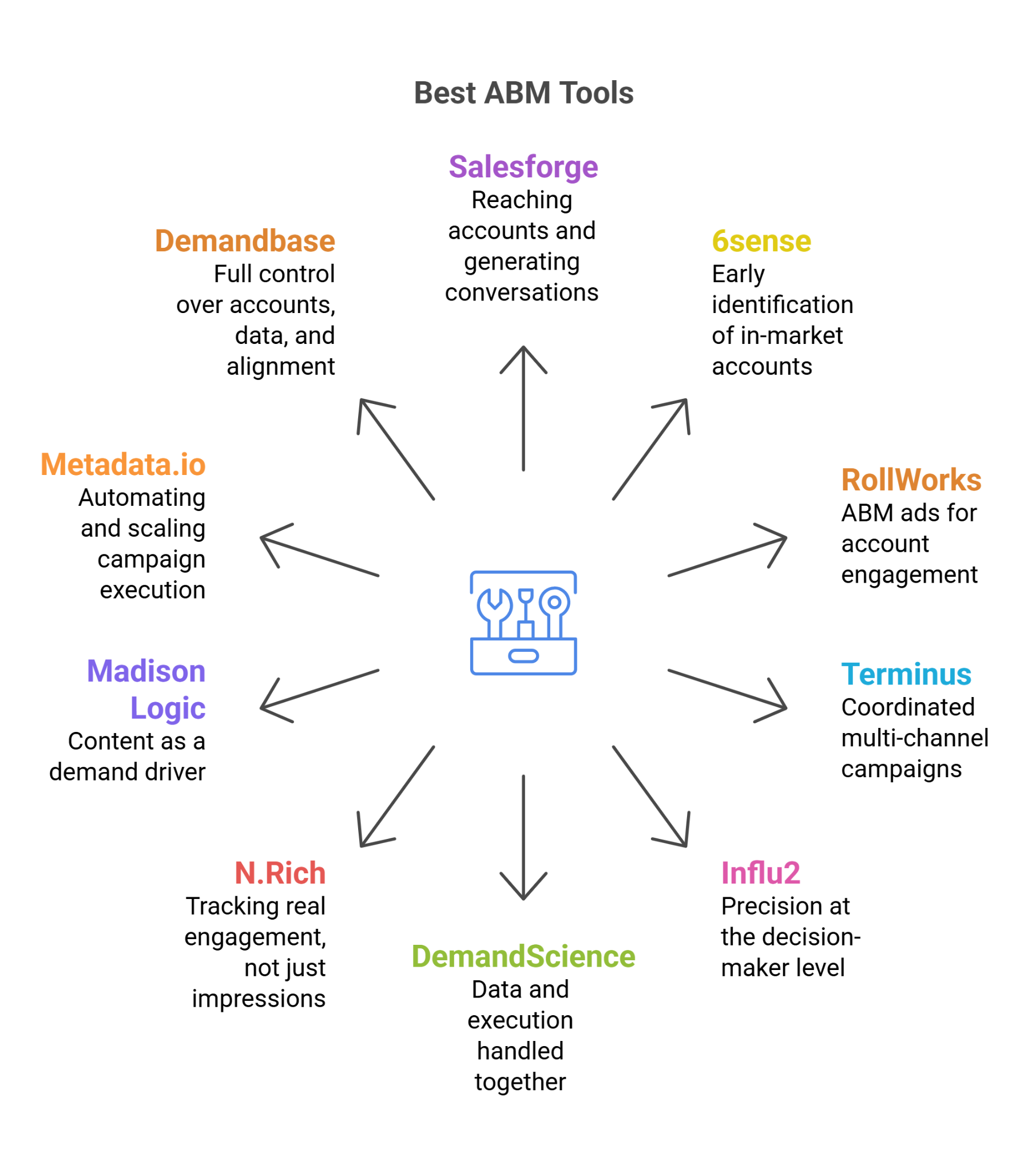
10 Best ABM Tools (Quick Glance)

Best ABM tools
This image shows the Best ABM tool
  • Demandbase is best when you want full control over accounts, data, and sales-marketing alignment
  • 6sense is strongest when your priority is identifying in-market accounts early
  • RollWorks fits when ABM ads are your main way to engage accounts
  • Terminus works best for running coordinated multi-channel campaigns
  • Influ2 stands out when you need precision at the decision-maker level
  • DemandScience makes sense when you want both data and execution handled together
  • N.Rich is built for tracking real engagement, not just impressions
  • Madison Logic is ideal when content is your primary driver of demand
  • Metadata.io is best when you want to automate and scale campaign execution
  • Salesforge becomes essential when you need to actually reach accounts and generate conversations 

How Top 1% Teams Break ABM Before Choosing Any Tool

One thing I’ve noticed is that teams that get ABM right don’t start with tools.

They first break it into 3 simple parts:

  • Targeting → which accounts they are going after
  • Orchestration → how they run campaigns for those accounts
  • Execution → how they reach people and start conversations

Only after this, they look at tools.

Not “which tool has more features.”

But:

“Which part of ABM do I need help with right now?”

That’s the lens you should use while going through this list.

Every tool here solves a specific part of ABM, not everything end-to-end.

How I Evaluated These ABM Tools

I didn’t just compare features.

Each platform was evaluated based on how it actually works in a real ABM setup:

  • Fit across core ABM stages (targeting, orchestration, execution)
  • Ability to work with a fixed list of high-value accounts
  • Depth of account-level engagement (not just lead activity)
  • Support for multi-channel touchpoints across campaigns
  • Role in a real workflow (how it fits with other tools)
  • Focus vs overlap (does it solve one part clearly, or try to do everything)

I also looked at how these tools perform when used together, because ABM rarely runs on a single tool.

10 Best ABM Tools Comparison Table

Tool What It Does ABM Stage Best For
Demandbase Account data + orchestration platform Targeting + Engagement Running ABM across sales & marketing
6sense AI intent data + predictive targeting Targeting Finding high-intent accounts early
Terminus Multi-channel campaign execution Engagement Running ABM across ads, email, web
RollWorks Account-based advertising Engagement Running ABM ads across channels
Influ2 Contact-level targeting & ads Engagement Targeting specific decision-makers
N.Rich ABM ads + engagement tracking Engagement Tracking real account engagement
Madison Logic Content syndication + ads Engagement Content-led ABM campaigns
Metadata.io Campaign automation & optimization Execution Scaling and optimizing campaigns
DemandScience Data + campaigns + services Targeting + Execution Teams needing support + execution
Salesforge Outbound outreach (email + LinkedIn) Execution (Outbound) Turning accounts into conversations

1. Demandbase - Best for Running ABM Across Sales and Marketing

Demandbase is an account-based GTM platform that brings your sales and marketing together using shared data, insights, and actions.
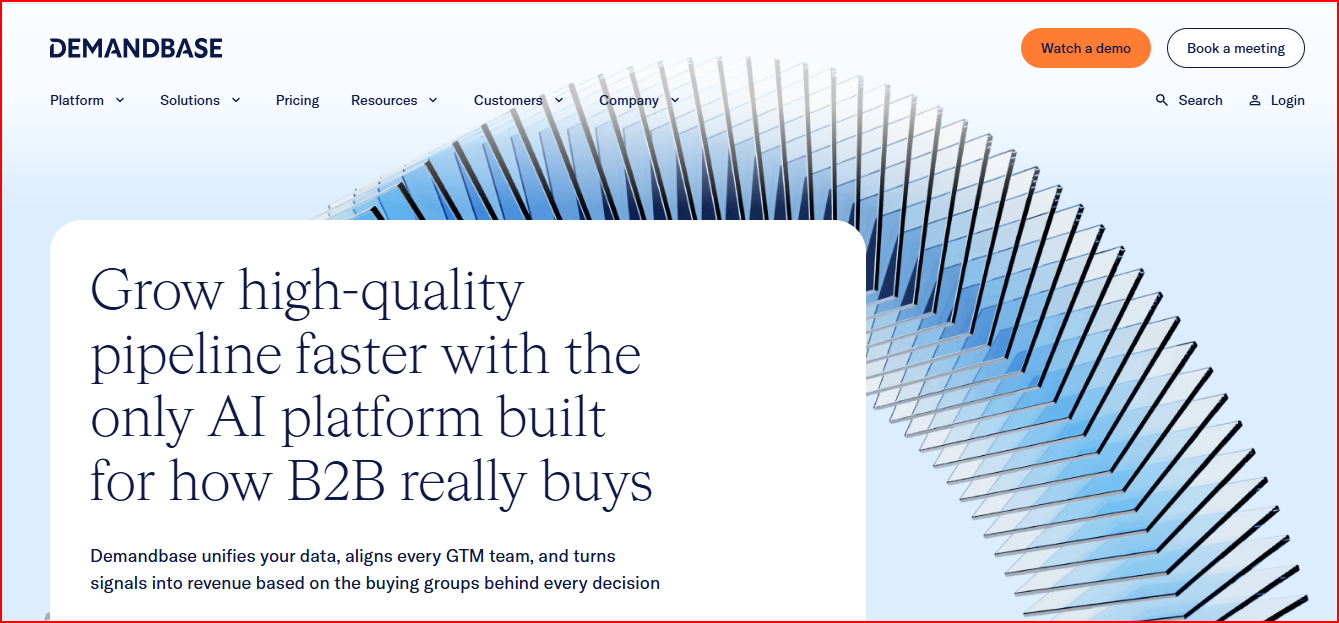
Demandbase - ABM for Sales and Marketing
This image shows the Demandbase - ABM for Sales and Marketing

It fits into the orchestration and engagement part of ABM, where you’re managing accounts, tracking signals, and taking action.

It also helps you work at the buying group level, so you’re engaging multiple people inside an account, not just one contact.

So if your goal is to keep account data and actions in one place, this setup fits well.

I found it simpler when everything is managed from one account view instead of being split across tools.

Key Features

Demandbase brings multiple things together in one system:

  • Combines 1st, 2nd, and 3rd-party data into a single account view
  • Helps you see the full buying group inside an account
  • Uses AI to suggest the next best action for your team
  • Allows you to identify accounts showing intent signals
  • Connects with your existing tools and systems

Best Use Case

Demandbase is usually used when the goal is to run ABM in a more connected way, instead of managing things separately across tools.

It fits well when:

  • Sales and marketing need to work on the same set of accounts
  • You want a single place to see account activity and signals
  • There’s a need to turn account data into actual actions and follow-ups
Demandbase user talking about its actions
This image shows the Demandbase user talking about its actions
  • Your team is already using multiple tools and needs them connected around accounts

From what I saw, this worked best when the goal is to keep sales and marketing aligned while managing accounts from one place instead of switching between tools.

Where It Might Not Work

  • If you’re looking for a single standalone tool for only sales or only marketing
  • If you don’t need a combined system across teams

Pricing

  • Platform fee + flat fee per user
  • Custom pricing based on your setup
  • Separate options for advertising and data

Basically, it means you’re paying for both the platform and the number of people using it.

So as your team grows, the cost scales with it.

This works when you want flexibility in how you use the tool, but it also means you won’t get a clear price upfront without going through their process.

2. 6sense - Best for Identifying High-Intent Accounts Early

6sense is an AI-powered ABM platform that helps you identify which accounts are actually in-market and when to engage them using intent data, predictive modeling, and AI insights.
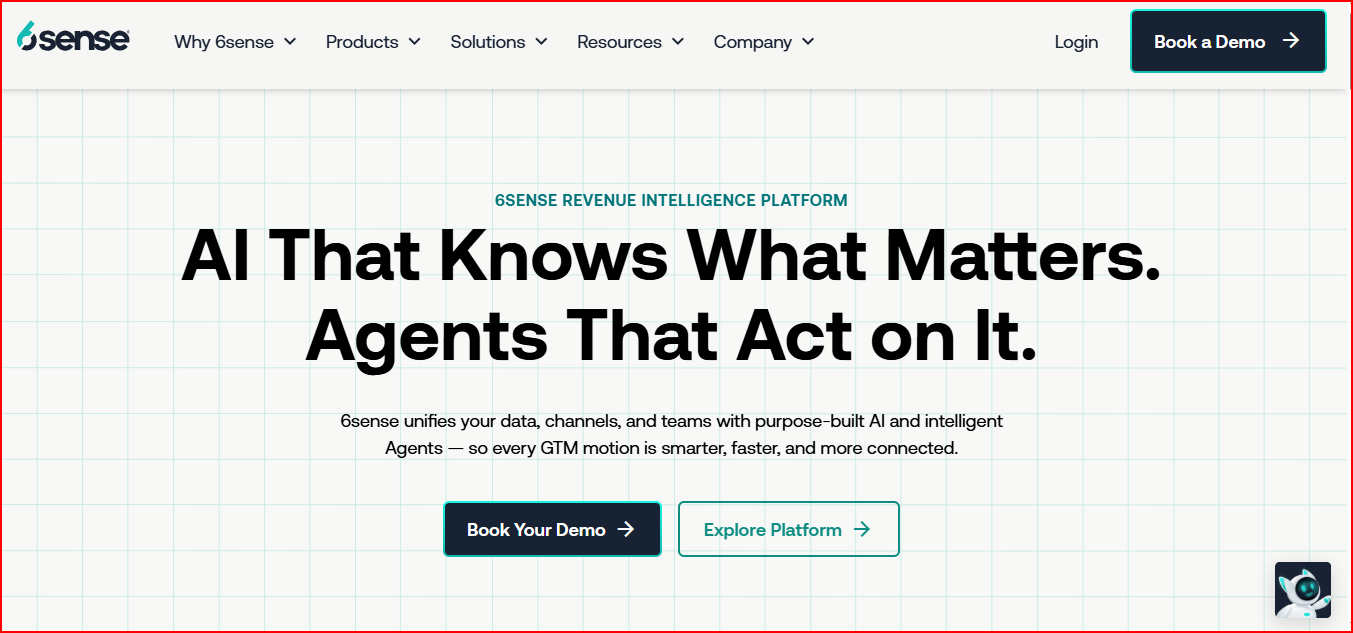
6sense - AI-powered ABM platform
This image shows the 6sense - AI-powered ABM platform

It fits more into the targeting and early-stage engagement side of ABM, where the focus is on finding the right accounts before they even reach out.

Instead of relying on form fills or visible activity, it tracks signals and predicts which accounts are researching and likely to buy, so you can prioritize them early.

So if your goal is to know which accounts to focus on and when to act, 6sense fits that setup well.

I found it useful when the focus is on reducing guesswork and focusing only on accounts that are already showing intent.

Key Features

  • Uses AI to identify high-intent accounts
  • Predictive modeling to spot buyers early in their journey
  • Tracks intent signals and prioritizes accounts
  • Helps run personalized campaigns based on real-time activity
  • Supports multi-channel execution (ads, email, web, sales)
  • Reporting and analytics for account-level insights

Best Use Case

6sense is usually used when the goal is to focus on accounts that are already showing buying signals, instead of targeting blindly.

It fits well when:

  • You want to identify accounts early in their research phase
  • There’s a need to prioritize accounts based on intent and likelihood to buy
6sense user satisfaction with its high intent signals
This image shows the 6sense user satisfaction with its high intent signals
  • You want campaigns to respond to real-time buyer activity
  • Sales needs clearer signals on which accounts to engage first

From what I saw, this works best when the goal is to reduce guesswork and focus only on accounts that are more likely to convert.

Where It Might Not Work

  • If you’re not relying on intent data or predictive signals
  • If your approach is more manual and not data-driven

Pricing

  • Pricing details are not publicly listed
  • You need to request a demo or contact their team

It means pricing is customized based on your setup and usage.

This makes it harder to compare upfront, but it usually indicates the tool is tailored based on how deeply you use its data and AI features.

3. RollWorks (AdRoll ABM) - Best for Running ABM Advertising Campaigns

RollWorks (now AdRoll ABM) is an ABM platform focused on helping you run targeted advertising campaigns to reach and engage specific accounts across channels.
AdRoll - Advertising ABM
This image shows the AdRoll - Advertising ABM

It mainly helps in the part of ABM where you’re running campaigns and keeping accounts engaged through ads.

It helps you identify the right accounts, track their signals, and then reach decision-makers through multi-channel ads and touchpoints.

So if your focus is on running ABM through ads and staying visible to your target accounts over time, this helps you well.

For me, this feels more useful when ads are doing most of the work in your pipeline, not just supporting it.

Key Features

  • Runs multi-channel advertising campaigns (web, social, apps, etc.)
  • Identifies and targets high-fit accounts using data and signals
  • Tracks buyer signals and suggests next actions
  • Supports account and contact-level targeting
  • Measures performance across the funnel and ties it to revenue
  • Connects with CRM and other tools

Best Use Case

RollWorks is usually used when the goal is to reach accounts consistently through ads and keep them engaged over time.

It fits well when:

  • You want to run account-based advertising campaigns
  • There’s a need to stay visible across multiple channels
AdRoll user talking about its multichannel visibility
This image shows the AdRoll user talking about its multichannel visibility
  • You want to engage accounts before and during their buying journey
  • Your team is using ads as a key part of ABM

From what I saw, this works best when the focus is on building visibility and staying top-of-mind with target accounts.

Where It Might Not Work

  • If you’re not planning to use ads in your ABM strategy
  • If your focus is only on direct outreach or sales-driven engagement

Pricing

  • Self-service option with pay-as-you-go advertising
  • Managed services available based on ad spend
  • Advanced package with platform access and added services
  • Add-ons like cross-channel attribution and social ads

Basically, it means pricing depends on how much you spend on ads and how much support you need.

This gives flexibility, but costs can vary based on campaign scale and usage.

4. Terminus - Best for Running Multi-Channel ABM Campaigns

Terminus is an ABM platform that helps you engage target accounts across ads, email, website, chat, and sales outreach from one place.
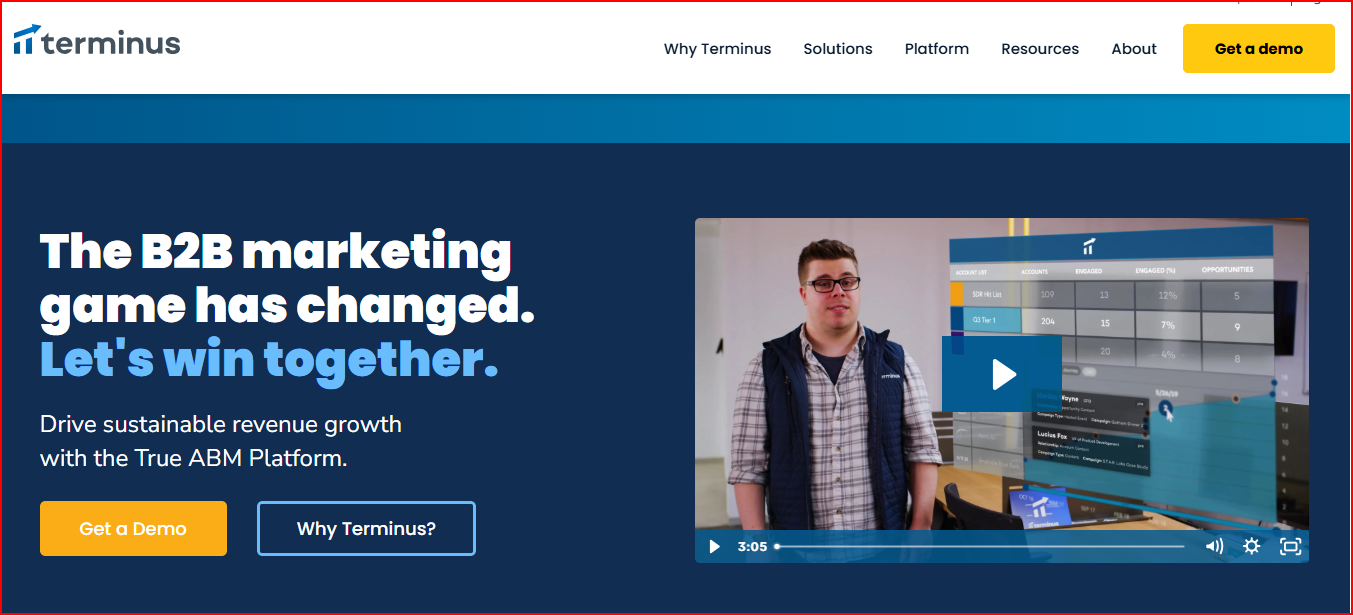
Terminus - Multichannel ABM tool
This image shows the Terminus - Multichannel ABM tool

It focuses on the part of ABM where you’re running campaigns across channels and keeping everything connected, instead of managing each touchpoint separately.

It brings together account data, campaign execution, and engagement tracking so you can manage how accounts move from awareness to pipeline in a more structured way.

So if your goal is to run ABM across multiple channels without juggling different tools, Terminus fits that setup well.

For me, this makes more sense when things start getting messy across channels, and you need one place to keep everything aligned.

Key Features

  • Runs multi-channel campaigns (ads, email, chat, website, sales)
  • Engagement Hub to manage account interactions
  • Data Studio for account segmentation
  • Measurement Studio for tracking performance
  • Supports first-party data targeting
  • Integrates with sales and marketing tools

Best Use Case

Terminus is usually used when the goal is to run ABM across multiple channels in a coordinated way.

It fits well when:

  • You want to engage accounts across ads, email, website, and sales touchpoints
  • There’s a need to create consistent experiences across channels
  • You want to manage the full journey from awareness to pipeline
  • Your team is already running campaigns across different platforms

Personally, I see this working better when you already have multiple channels running and need them to follow the same plan instead of acting independently.

Where It Might Not Work

  • If you’re only focusing on one channel
  • If you don’t need a multi-channel setup

Pricing

  • Pricing is not publicly listed
  • Requires demo or contact

For me, this feels like something you evaluate after you’re clear on your setup, since pricing depends on how broadly you plan to use it.

5. Influ2 - Best for Contact-Level ABM Targeting

Influ2 is an ABM platform that focuses on helping you target and engage specific people inside accounts, not just the account itself.
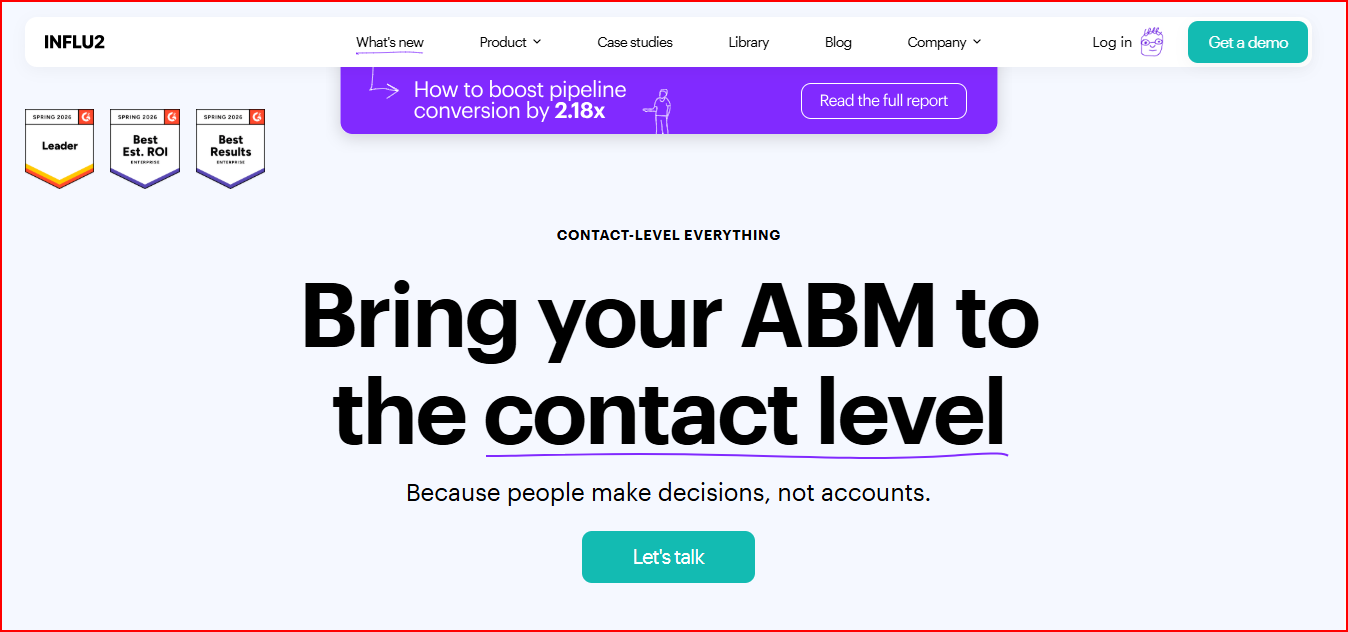
 Influ2 - Contact level ABM platform
This image shows the Influ2 - Contact level ABM platform

It works on the part of ABM where you’re engaging individual decision-makers, using contact-level data, ads, and signals instead of broad account targeting.

Instead of showing ads to a company and guessing who saw them, it lets you target named contacts, track their engagement, and understand who is actually interested.

So if your goal is to move beyond account-level targeting and focus on actual buyers, Influ2 fits that approach well.

For me, this stands out when you want clarity on who exactly is engaging, not just which company.

Key Features

  • Runs contact-level ads targeting specific people
  • Tracks intent signals at individual level
  • Shows who engaged with ads by name
  • Supports contact-level journey orchestration
  • Provides revenue attribution at contact level
  • Helps align sales with actual engaged buyers

Best Use Case

Influ2 is usually used when the goal is to engage specific decision-makers inside accounts instead of targeting broadly.

It fits well when:

  • You want to target individual contacts, not just companies
  • There’s a need to know who is engaging before the form fills
  • Sales needs clarity on who to reach out to and when
  • You want more precise targeting instead of wide campaigns
Influ2 user pricing its precise targeting
This image shows the Influ2 user pricing its precise targeting

Personally, this feels more useful when account-level targeting starts feeling too broad, and you need more precision on who’s actually involved.

Where It Might Not Work

  • If you’re only focused on account-level campaigns
  • If you don’t need contact-level targeting

Pricing

  • Pricing is not publicly listed
  • Requires demo or contact

From how this is structured, it looks like pricing depends on how deeply you use contact-level targeting.

So it’s something you evaluate based on how specific your targeting needs are, not just based on basic usage.

6. DemandScience - Best for Combining Data, Campaigns, and Execution in One Flow

DemandScience is an ABM solution that helps you identify the right accounts, enrich your data, and run campaigns across channels with support from both tools and services.
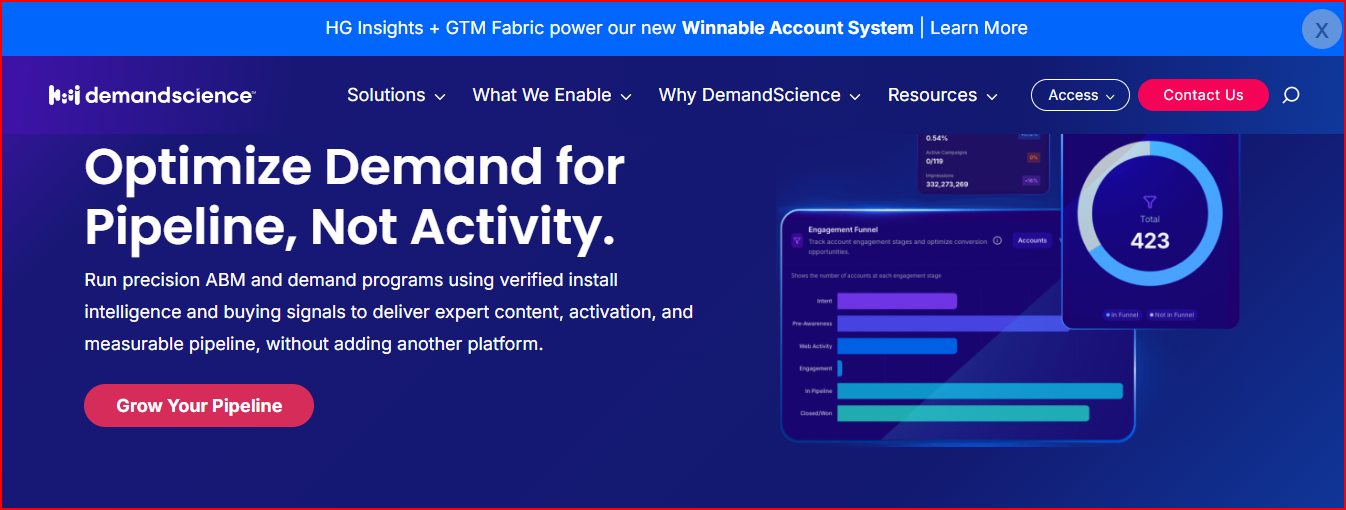
DemandScience - ABM tool that combines data, campaign, and execution
This image shows the DemandScience - ABM tool that combines data, campaign, and execution

It works across the part of ABM where you’re figuring out which accounts to target and then executing campaigns around them, instead of handling data, content, and campaigns separately.

It combines data, AI, and services to help you prioritize accounts, build messaging for different stakeholders, and launch campaigns that respond to account behavior.

So if your goal is to simplify how you identify accounts and run campaigns without managing everything yourself, DemandScience fits that setup well.

For me, this feels more practical when you don’t just want tools, but also help in actually running campaigns.

Key Features

  • Helps identify and prioritize target accounts using data
  • Enriches and cleans existing data
  • Supports multi-channel campaign execution
  • Uses signals and triggers to automate campaigns
  • Provides website intelligence to identify engaging companies
  • Offers services to plan and run campaigns

Best Use Case

DemandScience is usually used when the goal is to manage both data and campaign execution together without too much manual work.

It fits well when:
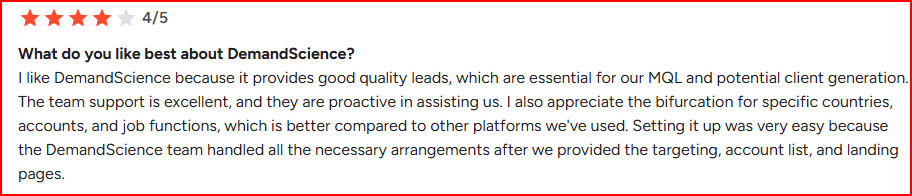
  • You need help with account selection and prioritization
DemandScience user satisfaction with the quality of leads
This image shows the DemandScience user satisfaction with the quality of leads
  • There’s a need to clean and enrich your existing data
  • You want campaigns that adapt based on account behavior
  • You prefer support in executing campaigns, not just tools

This tends to work better when you want both the strategy and execution handled in a more guided way, instead of managing everything internally.

Where It Might Not Work

  • If you only need a tool without additional services
  • If your team already handles data and campaigns fully in-house

Pricing

  • Pricing is not publicly listed
  • Depends on solutions and services used

So, pricing depends on how much of the platform and services you use.

7. N.Rich - Best for ABM Advertising with Real Engagement Tracking

N.Rich is an ABM platform focused on helping you run account-based advertising campaigns and track real engagement from your target accounts.
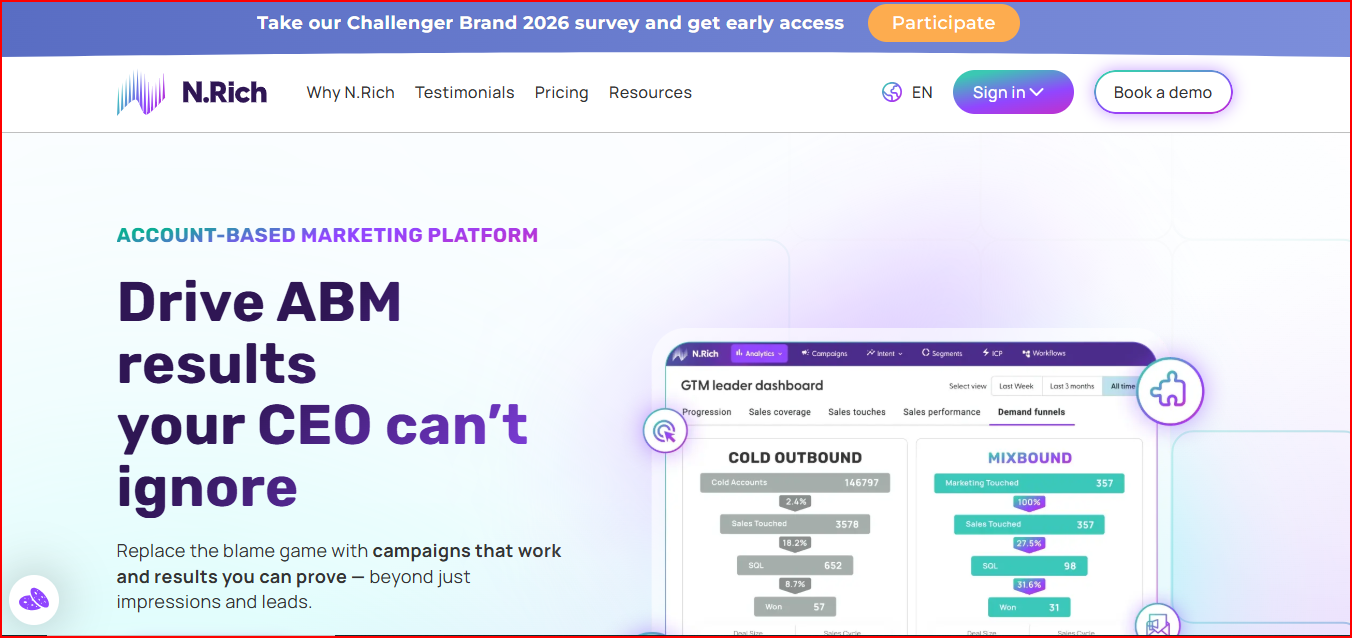
N.Rich - ABM platform that runs account-based advertising
This image shows the N.Rich - ABM platform that runs account-based advertising

It works in the part of ABM where you’re executing campaigns and measuring how accounts actually interact, instead of just tracking impressions or clicks.

It combines account lists, intent data, advertising, and analytics so you can target the right accounts and see how they engage across your campaigns.

So if your goal is to run ABM campaigns and track real engagement from accounts, N.Rich fits that setup well.

What I like here is that it doesn’t stop at showing ads, it actually shows which accounts are doing something with them.

Key Features

  • Builds account lists based on ICP and intent data
  • Tracks first-party and third-party intent signals
  • Runs account-based advertising campaigns
  • Charges based on engagement instead of impressions
  • Provides account-level analytics and dashboards
  • AI tools for campaign planning and content creation

Best Use Case

N.Rich is usually used when the goal is to run ABM campaigns with a clear focus on engagement and measurable impact.

It fits well when:

  • You want to target accounts based on intent and ICP fit
  • There’s a need to track real engagement instead of impressions
  • You want better visibility into campaign impact on the pipeline
N.Rich user talking about its analytics and visibility
This image shows the N.Rich user talking about its analytics and visibility
  • Your team is running ABM campaigns and wants clearer reporting

The way this plays out, it’s more useful when you want to see actual movement from accounts, not just activity numbers.
Where It Might Not Work

  • If you’re not focusing on advertising in your ABM strategy
  • If engagement tracking is not a priority

Pricing

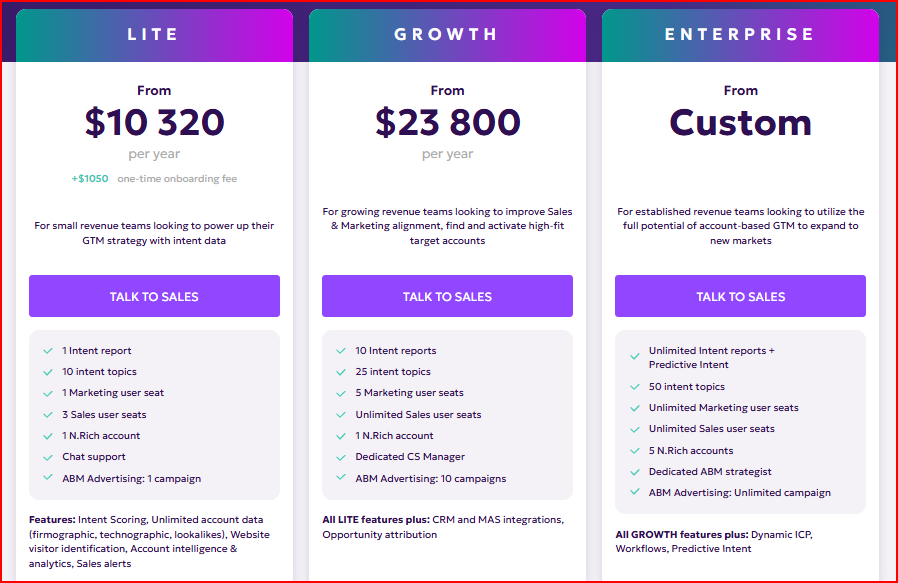
N.Rich pricing
This image shows the N.Rich pricing
  • LITE - $10,320/year (+ ~$1,050 onboarding) → 1 report, 1 campaign, small team → for testing ABM
  • GROWTH - $23,800/year → 10 reports, 10 campaigns, more users → for running ABM properly
  • ENTERPRISE - Custom pricing → unlimited reports, campaigns, users → for full-scale ABM 

One important thing to understand here:

You’re not paying for “contacts”- you’re paying for  per contact, you’re basically paying for ABM capacity (data + campaigns + users)

So the cost scales based on how much ABM activity you want to handle, not database size.

8. Madison Logic - Best for Content-Led ABM Campaigns

Madison Logic is an ABM platform that helps you reach and engage target accounts using content, ads, and intent data across multiple channels.
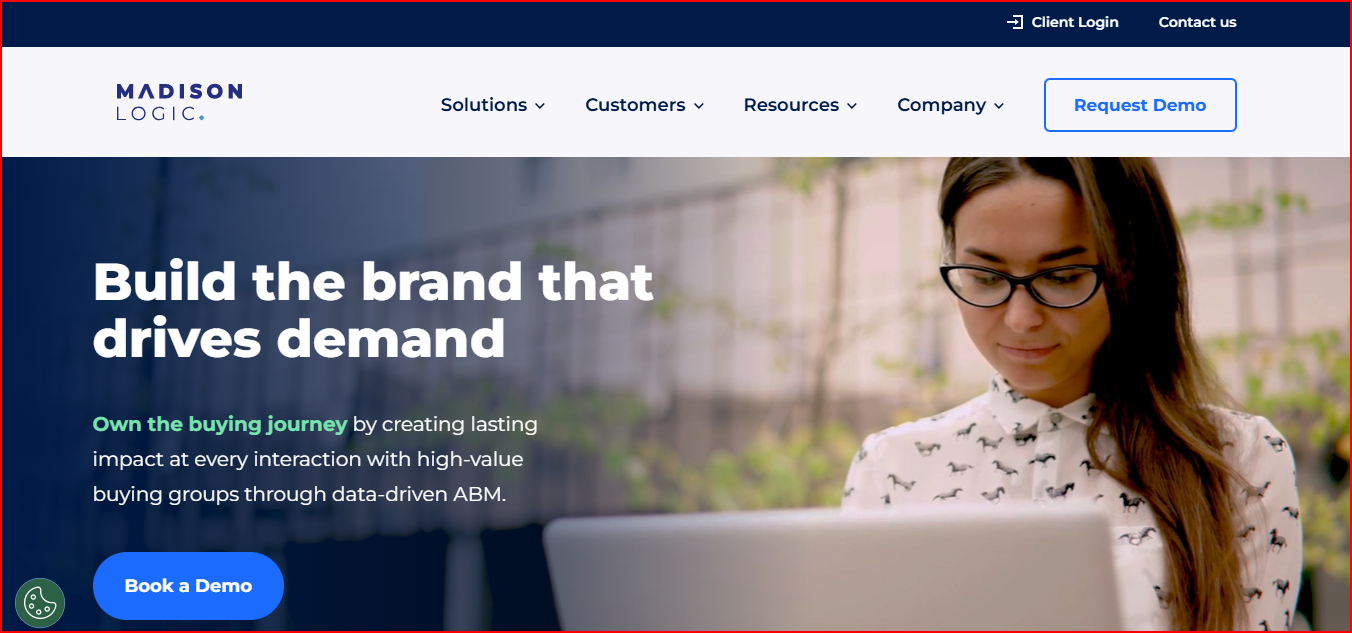
Madison Logic is an ABM platform that helps content-led campaigns
This image shows the Madison Logic is an ABM platform that helps content-led campaigns

It works in the part of ABM where you’re driving awareness and engagement using content and media, especially for reaching buying groups at scale.

It combines intent data with content distribution and advertising, so you can show relevant content to accounts that are already researching topics related to your solution.

So if your goal is to push content in front of the right accounts and move them through the buying journey, Madison Logic fits that setup well.

To me, this feels more aligned when content is a big part of how you generate and nurture demand.

Key Features

  • Uses AI to identify and prioritize in-market accounts
  • Distributes content through content syndication
  • Runs multi-channel advertising (display, social, CTV, audio)
  • Targets buying groups across channels
  • Provides intent data and account insights
  • Tracks the impact on the pipeline and revenue

Best Use Case

Madison Logic is usually used when the goal is to drive engagement using content and media across target accounts.

It fits well when:

  • You want to distribute content to high-value accounts
Medison Logic user complimenting about its lead quality
This image shows the Medison Logic user complimenting about its lead quality
  • There’s a need to reach buyers across multiple media channels
  • You rely on content to build awareness and nurture accounts
  • You want to connect engagement to pipeline impact

In most cases I’ve seen, this works better when content is already part of your demand strategy, not something you’re just starting.

Where It Might Not Work

  • If you’re not using content as part of your ABM strategy
  • If your focus is only on direct outreach or sales-led motion

Pricing

  • Pricing is not publicly listed
  • Based on solutions and campaign scope

From how this is structured, teams usually end up paying more as they expand into more channels and campaigns.

So the cost grows with how broadly you run content distribution.

9. Metadata.io - Best for Automating ABM Campaign Execution

Metadata.io is an ABM platform that helps you run and automate campaigns across channels while optimizing performance based on results.
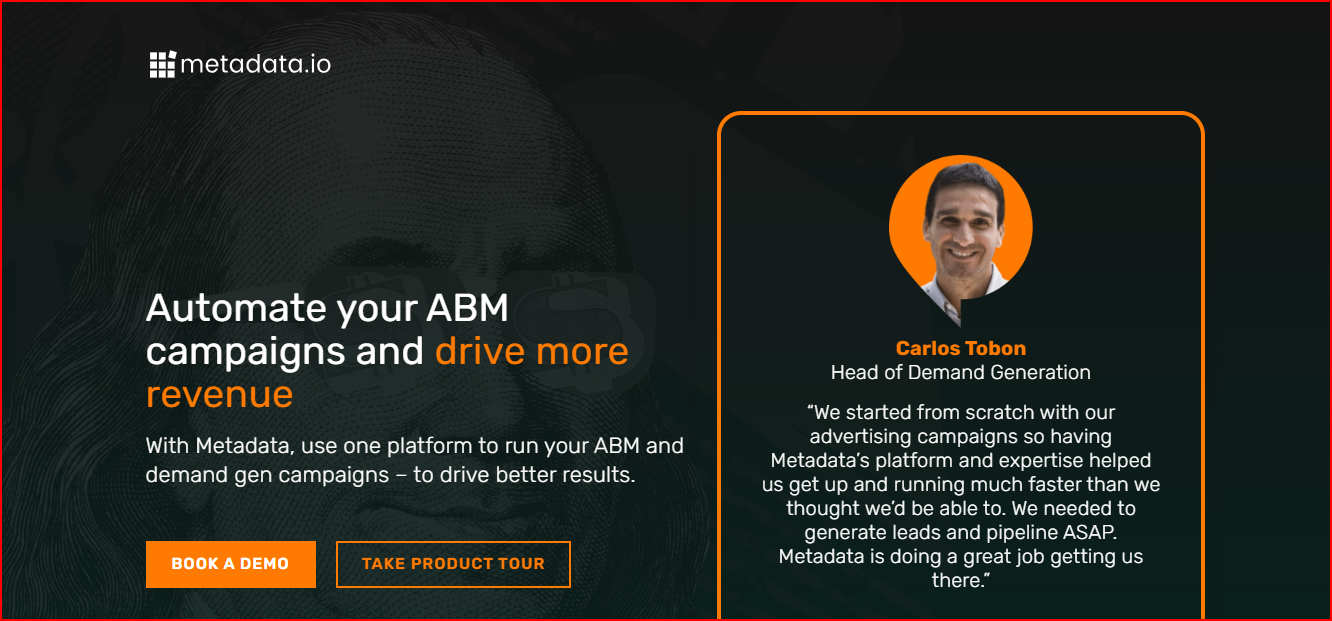
Metadata.io - automated ABM
This image shows the Metadata.io - automated ABM

It works in the part of ABM where you’re executing campaigns at scale and continuously improving them, instead of manually setting up and managing each one.

It connects your ad channels, CRM, and marketing tools, then automatically adjusts campaigns, like shifting budget toward what’s actually driving pipeline.

So if your goal is to run multiple ABM campaigns without manually managing everything, Metadata fits that setup well.

From what I’ve seen, teams using this usually want to move faster and run more experiments without increasing manual work.

Key Features

  • Automates campaign setup and execution
  • Runs campaigns across multiple ad channels
  • Automatically reallocates budget to high-performing campaigns
  • Connects with CRM and marketing tools
  • Supports rapid testing of messaging and creatives
  • Tracks impact on pipeline and ROI

Best Use Case

Metadata is usually used when the goal is to scale campaign execution and improve performance through automation.

It fits well when:

  • You want to run multiple campaigns at once
  • There’s a need to test and optimize campaigns continuously
  • You want to reduce manual campaign work
Metadata.io user talking about its automated work
This image shows the Metadata.io user talking about its automated work
  • You’re focused on improving ROI and pipeline from ads

In most cases I’ve seen, this works better when teams are already running campaigns and want to increase volume without adding more effort.

Where It Might Not Work

  • If you’re running only a few campaigns
  • If you prefer manual control over campaign setup

Pricing

  • Pricing is not publicly listed
  • Requires demo or contact

From how this is structured, pricing likely depends on how many campaigns and channels you’re running.

So the cost grows as you scale campaign volume and usage.

10. Salesforge - Best for Executing Outreach (Outbound Layer)

Salesforge is not a traditional ABM platform, but it plays an important role in an ABM setup by helping you reach and engage target accounts through email and LinkedIn at scale.
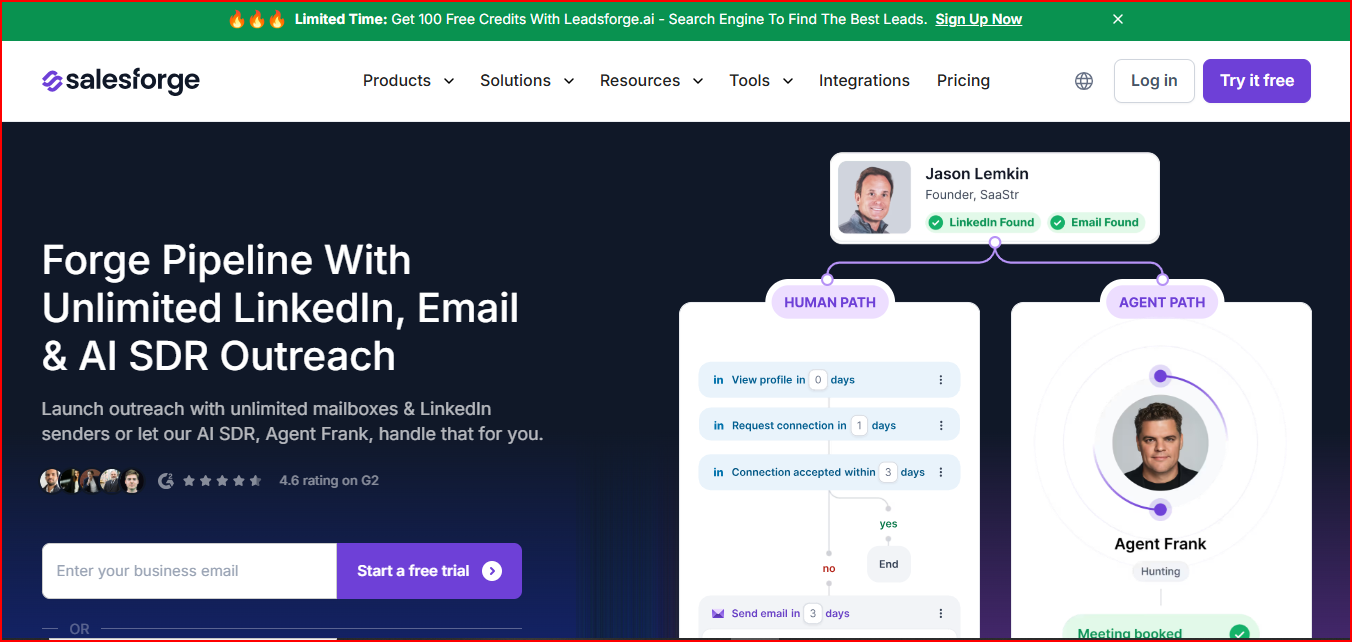
Salesforge - works as an Outreach layer in ABM
This image shows the Salesforge - works as an Outreach layer in ABM

It fits into the part of ABM where you’re executing outreach after identifying your target accounts.

While ABM tools focus on selecting and warming up accounts, Salesforge helps you turn those accounts into actual conversations by reaching decision-makers directly.

So if your ABM strategy already defines who to target, Salesforge helps you activate those accounts through outbound and move them into the pipeline.

Personally, this is the part where I’ve seen things either work or completely stall, because without outreach, those accounts just sit there.

Key Features

  • Runs multi-channel outreach (email + LinkedIn)
  • Supports unlimited mailboxes and LinkedIn senders
  • Built-in email warm-up and deliverability system
  • Primebox™ to manage replies across channels
  • AI SDR (Agent Frank) for automated outreach
  • Personalization, A/B testing, and sequence automation

Best Use Case

Salesforge is usually used when the goal is to convert target accounts into conversations using outbound.

It fits well when:
  • You already have a defined ABM account list
  • You want to reach decision-makers via email and LinkedIn
  • There’s a need to scale outreach without deliverability issues
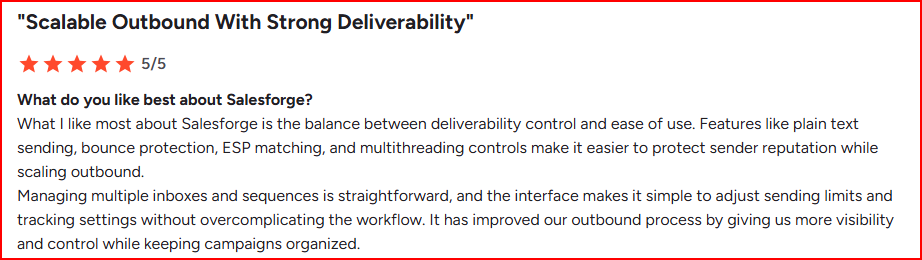
Salesforge user talking about its deliverability management
This image shows the Salesforge user talking about its deliverability management
  • You want to combine AI + human outreach workflows

 I’ve seen this work best when targeting is already done well, and the focus shifts to actually getting responses from those accounts.
Where It Might Not Work

  • If you don’t have a clear list of target accounts
  • If your strategy is fully inbound or ad-driven

Pricing

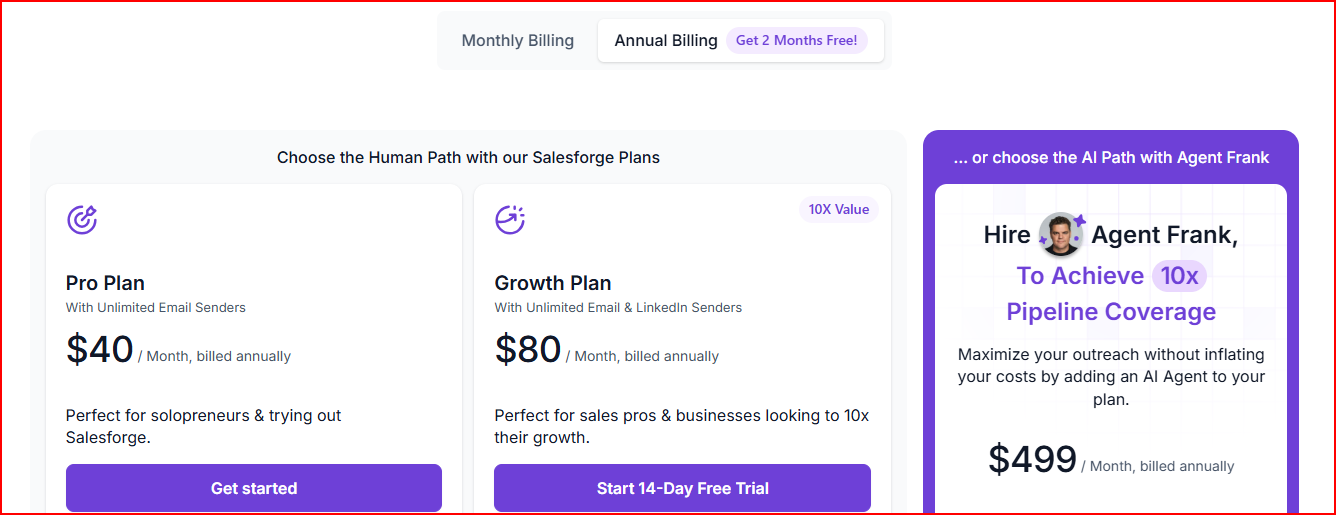
Salesforge pricing
This image shows the Salesforge pricing
  • Pro Plan - $40/month (annual)

    → 1,000 active contacts, 5,000 emails/month, 1 LinkedIn sender
  • Growth Plan - $80/month (annual)

    → 10,000 active contacts, 50,000 emails/month, unlimited LinkedIn senders
  • Agent Frank (AI SDR) - add-on for automated outreach

What this basically means is you’re paying for how much outreach you can actually run.

That means you’re paying based on how much outreach you can run (contacts + emails), with the option to automate execution.

If you think about it, this is closer to buying “pipeline capacity”; the more volume you can handle, the more opportunities you can generate.

Example ABM Stacks You Can Actually Run

Instead of mixing tools randomly, the idea is to build a complete flow — from identifying accounts → engaging them → starting conversations.

Here are a few complete stacks based on how teams usually set this up:

1. Full ABM Stack (Balanced Setup)

  • 6sense → identify in-market accounts
  • Terminus → run multi-channel campaigns
  • Influ2 → target key decision-makers
  • Salesforge → reach out via email + LinkedIn

This is a complete setup where you cover targeting → engagement → direct outreach.

What I’ve seen here is that once accounts are engaged, outreach becomes much easier because you’re not starting cold.

2. Advertising-Focused ABM Stack

  • Demandbase → account data + orchestration
  • RollWorks → run ABM ads
  • N.Rich → track engagement and intent
  • Salesforge → activate accounts through outbound

This works when ads are doing most of the work upfront.

In setups like this, outreach usually performs better because accounts have already seen your brand multiple times.

3. Content-Led ABM Stack

  • Madison Logic → distribute content
  • Metadata → automate and optimize campaigns
  • 6sense → track intent and prioritize accounts
  • Salesforge → follow up with outbound

This is more content-heavy.

This works well when content builds initial interest and outbound converts that into meetings.

4. Lean ABM Stack (Smaller Teams)

  • N.Rich → intent + campaigns
  • Influ2 → contact-level targeting
  • Salesforge → outbound execution

This is a simpler setup without too many tools.

Usually works when teams want to keep things focused but still cover targeting + engagement + outreach.

Personalized Outbound Strategy

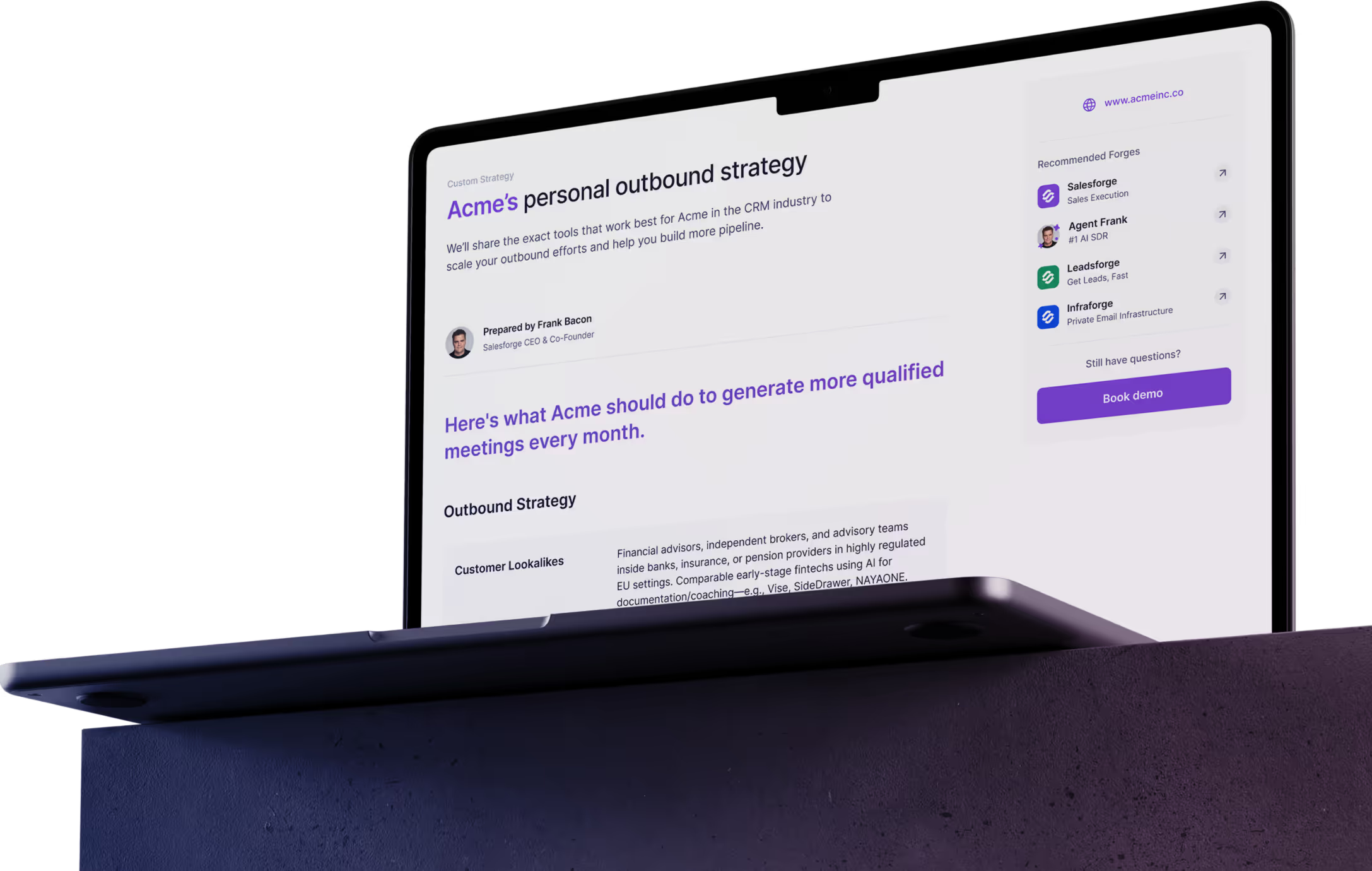
Get The Right Outbound Strategy In Minutes

Enter your email to get a custom plan & stack recommendation for your business

It's being carefully crafted by AI

Please check your mailbox in 5 minutes
Conclusion

If you break it down simply, each tool plays a different role in your ABM setup.

Here’s how they actually fit:

  • Demandbase works best when you want one system to align sales and marketing around the same accounts
  • 6sense makes the biggest impact when your priority is knowing which accounts are actually in-market
  • Terminus fits when you’re managing campaigns across multiple channels and need them connected
  • RollWorks is useful when ads are your main way to stay visible to target accounts
  • Influ2 becomes valuable when you care about which specific people are engaging with accounts
  • N.Rich helps when you want clearer proof of which accounts are actually interacting with your campaigns
  • Madison Logic stands out when content is your main way of building demand and engagement
  • Metadata.io works best when campaign execution and testing start becoming hard to manage manually
  • DemandScience fits when you want both data and support to actually run campaigns, not just tools
  • Salesforge comes into play when you need to turn all that account activity into real conversations through outreach

In the end, it’s not about picking one tool; it’s about making sure every step of your ABM process is covered and connected.

And one thing is clear, if you’re running ABM without a way to actually reach those accounts directly, you’re leaving pipeline on the table. 

That’s why adding Salesforge as your outreach layer is almost a must if you want your ABM efforts to convert into real conversations.

Add Salesforge and reach accounts and convert them into a pipeline.