Table of contents
Get insights delivered straight into your inbox every week!
Summarize with

10 Best LeadInfo Alternatives & Competitors in 2026

If you’re looking for Leadinfo alternatives, you’re likely running into one of three issues, incomplete visitor identification, lack of contact-level data, or slow follow-up workflows.

In Leadinfo’s case, the core flow is IP → company → basic insights

But in outbound, that’s not enough.

I’ve used it in a setup where we were tracking pricing page visits.

We could see the company, but:

  • no reliable decision-maker to contact
  • inconsistent identification across visits
  • limited ways to instantly trigger outreach

So high-intent traffic sat idle.

That shows up in reviews too:

  • Easy setup and intuitive interface
  • But person identification isn’t consistent
  • Support is slow during urgent issues

So if you’re searching for Leadinfo alternatives, this guide focuses on tools that go beyond identification.

It helps you move from visitor → contact → outbound execution.

Top LeadInfo Alternatives in 2026: Quick Overview

Here are the top 5 Leadinfo alternatives in 2026:

  1. Leadsforge - Best for turning visitor intent into actual leads.
  1. Leadfeeder (Dealfront) - Ideal for accurate company-level visitor identification with strong filtering and CRM integrations.
  1. ZoomInfo - Great for combining visitor tracking with a massive B2B contact database and intent data.
  1. Warmly - Best for real-time visitor and individual-level identification with built-in outreach workflows.
  1. 6sense - Ideal for advanced intent data and account-based targeting beyond basic visitor tracking.

How I Evaluated These Leadinfo Alternatives?

To make this list useful, I focused on what actually matters after a visitor hits your site.

Can you identify them, find the right contact, and act on it fast?

Here’s how I evaluated Leadinfo alternatives:

  • Accuracy of company identification (how often it actually resolves visitors)
  • Contact-level data (decision-makers, emails, not just company names)
  • Depth of intent signals (pages viewed, frequency, buying signals)
  • Speed of follow-up (real-time alerts, triggers, workflows)
  • Ease of use in day-to-day workflows
  • CRM and outbound integrations
  • Data reliability (noise, duplicates, missing info) 

These checks helped filter tools that don’t just track visitors, but help you actually do something with them.

Why Should You Look For a Leadinfo Alternative?

Leadinfo is a good starting point.

It shows which companies visit your site and how they behave.

When I first used it, the data looked useful:

  • pages visited
  • repeat visits
  • basic intent signals

It helped spot which companies were active.

But once I tried to use it for outbound, gaps showed up.

1. Important features cost extra: This was frustrating.

Things you actually need, like automated outreach and advanced lead capture, are not included.

They’re add-ons.

So the real cost ends up higher than expected.

2. Only company-level data: This was the biggest issue for me.

I could see which company visited

But not who inside that company to contact.

So I still had to use another tool to find decision-makers.

3. No free plan: I couldn’t test it properly without paying.

There’s a 14-day trial, but after that:

  • you’re pushed to a paid plan
  • key features are limited in lower tiers

For small teams, that’s a blocker.

4. Data isn’t always reliable: Sometimes visitors weren’t identified, or companies were misattributed.

Since it relies on IP matching, it’s not always accurate.

Leadinfo helps you understand traffic.

But it doesn’t always help you act on it fast.

That’s why I started looking for alternatives that:

  • give contact-level data
  • improve accuracy
  • and make follow-up faster 

Here are the top 10 LeadInfo alternatives in 2026.

10 Best LeadInfo Alternatives in 2026: Quick Comparison

Tool Best For Core Strength Data Level Intent Signals
Leadsforge Finding + enriching leads ICP search + enrichment Contact-level Yes (multi-source)
Leadfeeder Visitor tracking Filtering + CRM workflows Company + some contacts Yes
ZoomInfo Enterprise prospecting Large B2B database Contact + company Yes
Warmly GTM orchestration Person-level signals Person + account Yes
6sense Intent prediction AI account scoring Account-level Yes
Lead Forensics High-volume tracking IP matching engine Company-level Website behavior
Clearbit Data enrichment CRM enrichment Contact + company Limited
Albacross Tracking + outreach Auto-engagement Company + limited contacts Yes
Common Room Signal aggregation Multi-source signals Person + account Yes
Cognism Contact accuracy Verified data Contact-level Yes

1. Leadsforge - Best for turning visitor intent into actual contacts 

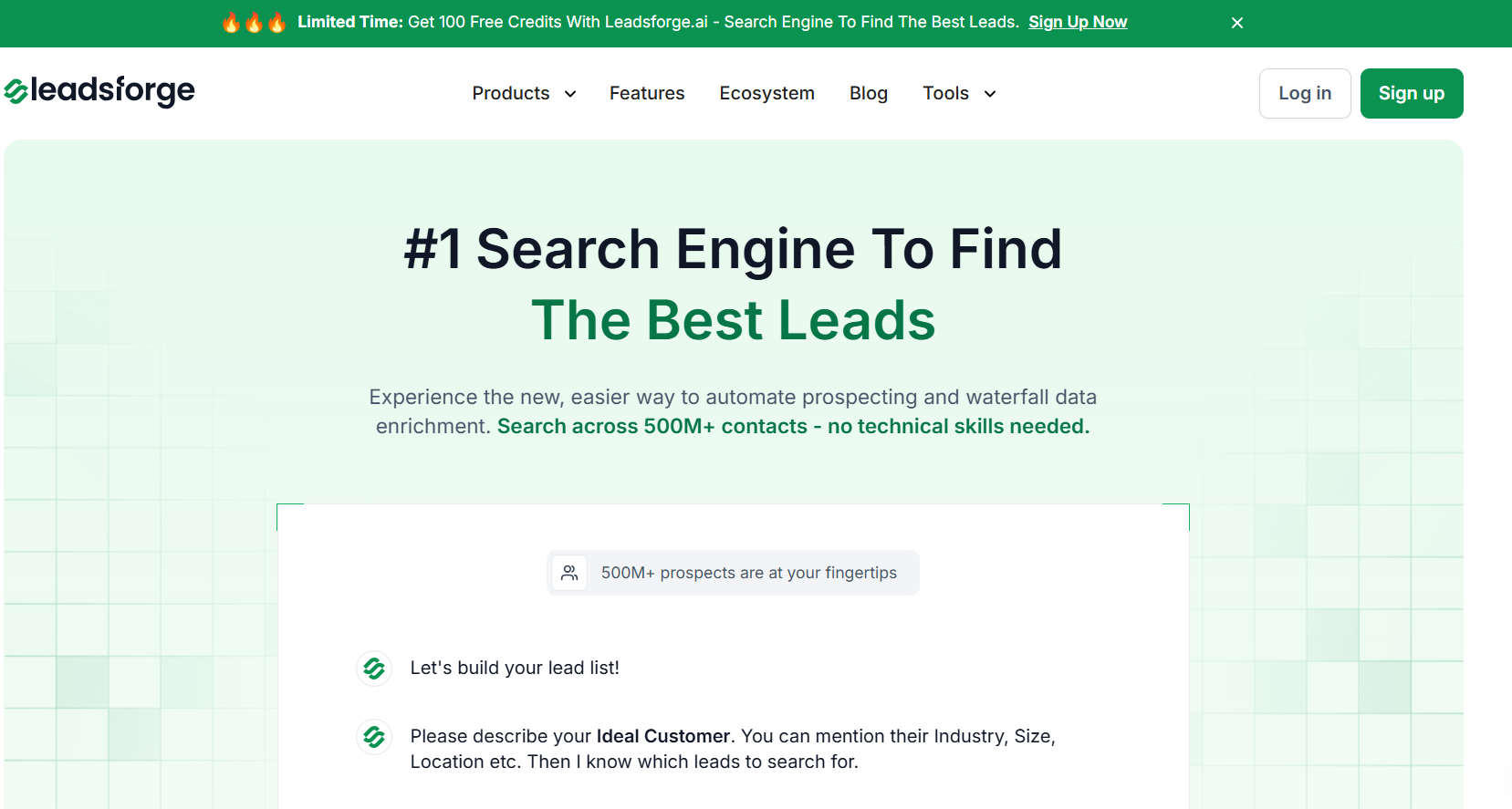
Leadsforge homepage
This image shows the Leadsforge homepage

Leadsforge works like a search engine for B2B leads.

When I used Leadinfo, I could see which companies were visiting my site.

But I still had to do the hard part manually, find the right people, and reach out.

Leadsforge fixes that exact gap.

Instead of focusing on “who visited your site”, it focuses on, “who should you contact right now based on your ICP and intent”

You describe your ideal customer in plain words, and it:

  • finds matching companies
  • pulls decision-makers
  • enriches emails, LinkedIn, phone numbers
  • and gives you a ready-to-use list

Under the hood, it uses multiple data sources and waterfall enrichment to improve match rates. 

So if one source fails, it keeps searching until it finds usable data.

What stood out to me is how fast you can go from idea to list to outreach.

With Leadinfo, you identify a company and then switch tools to find contacts

With Leadsforge, you skip that step entirely.

You can also layer in:

  • intent signals (hiring, growth, activity)
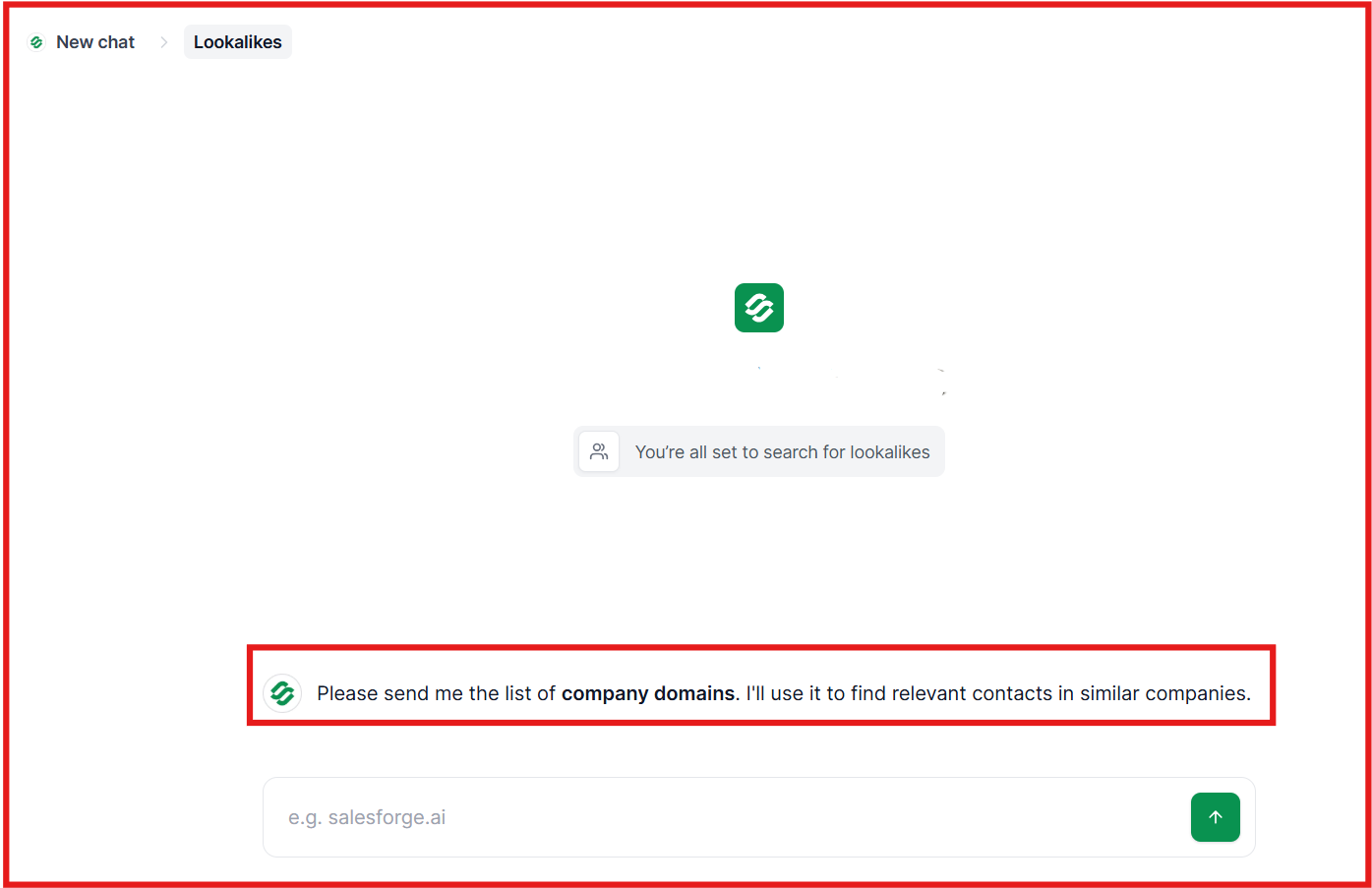
  • lookalikes and follower data
Find lookalike audience with Leadsforge
This image shows the Find lookalike audience with Leadsforge
  • CSV enrichment for existing lists

So instead of just tracking interest, you’re actively building pipeline.

That’s the real difference.

Leadinfo helps you see demand, but Leadsforge helps you act on it immediately.

Leadsforge vs LeadInfo: Quick Comparison

Feature Leadsforge Leadinfo
Core use case Find + enrich + act on leads Identify website visitors
Data level Contact-level (emails, phones, LinkedIn) Mostly company-level
Intent signals Yes (custom signals, triggers) Yes (website behavior)
Lead generation Yes (ICP search, lookalikes, followers) Limited
Data enrichment Waterfall enrichment (multi-source) Basic
Outreach readiness Direct export to outreach tools Requires extra steps
Ease of use Chat-based, simple Dashboard-based

Pros of Leadsforge 

  • Finds actual decision-makers, not just companies
  • Chat-based search makes prospecting fast
  • Waterfall enrichment improves data accuracy
  • Includes intent signals and qualification
  • Exports directly to tools like Salesforge
  • Credits don’t expire

Cons of Leadsforge 

  • Credit-based pricing (needs planning if scaling fast)
  • Not a website tracking tool (doesn’t replace Leadinfo 1:1)
  • Works best when paired with an outreach tool 

Leadsforge Pricing

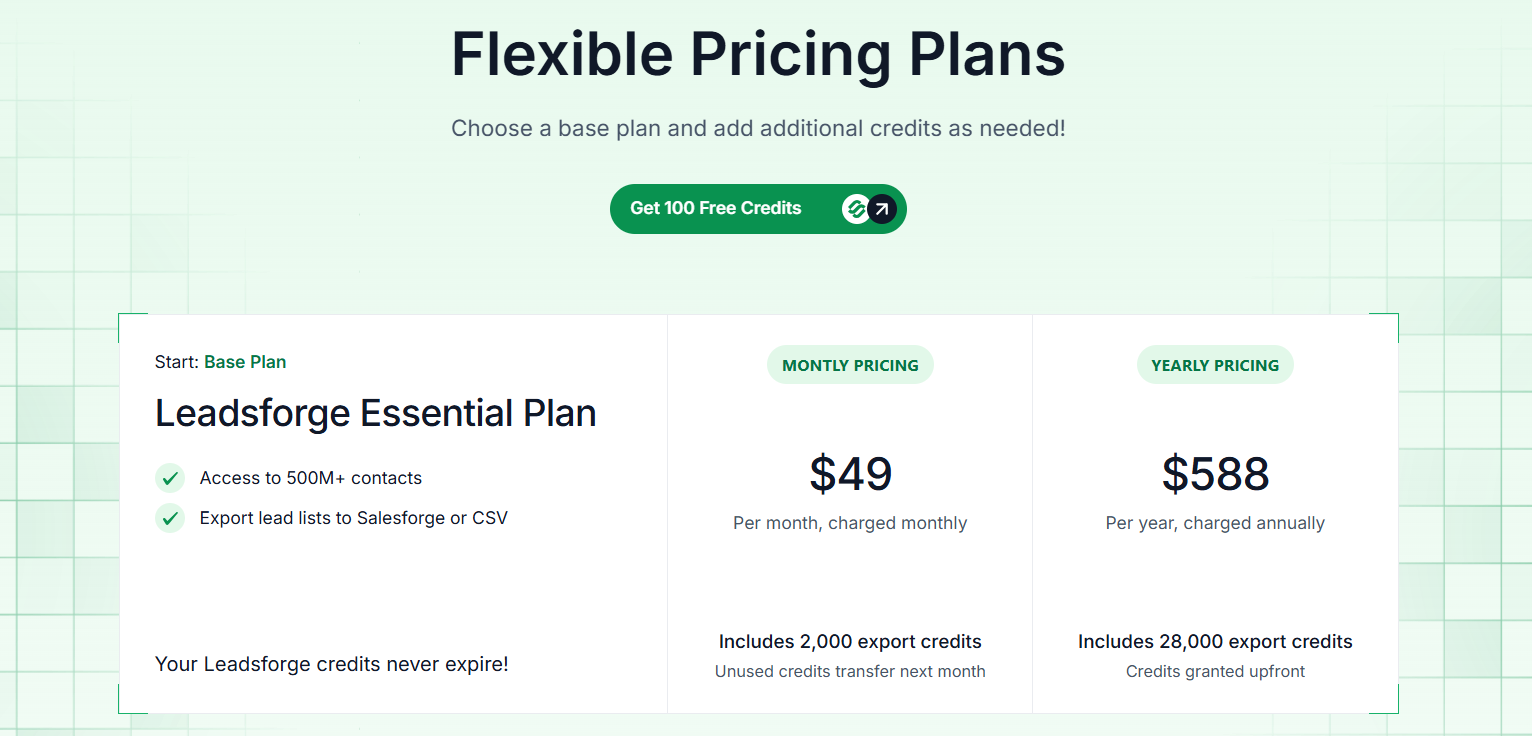
Leadsforge pricing
This image shows the Leadsforge pricing

Leadsforge offers 100 free credits to get started.

The paid plan starts at $49/month with 2,000 credits, and you can add more anytime.

That means:

  • 1 email ≈ 1 credit
  • 1 LinkedIn ≈ 1 credit
  • 1 phone ≈ 10 credits

For example, if you generate:

  • 1,000 email leads → ~1,000 credits
  • 200 leads with phones → ~2,000 credits

You’ll usually stay within or slightly exceed the base plan depending on how much data you pull.

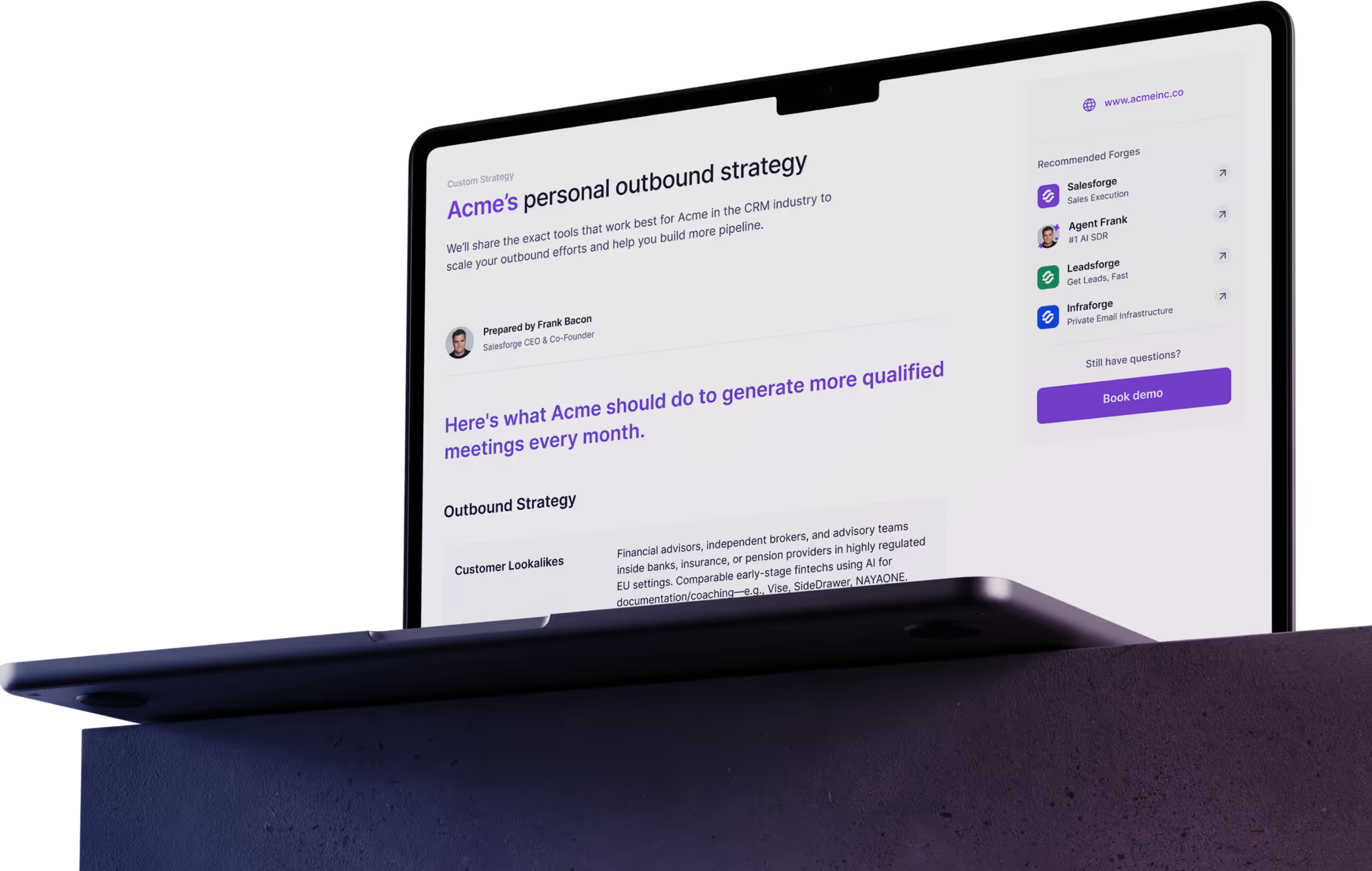
Personalized Outbound Strategy

Get The Right Outbound Strategy In Minutes

Enter your email to get a custom plan & stack recommendation for your business

It's being carefully crafted by AI

Please check your mailbox in 5 minutes

2. Leadfeeder (Dealfront) - Better for company-level tracking with more depth

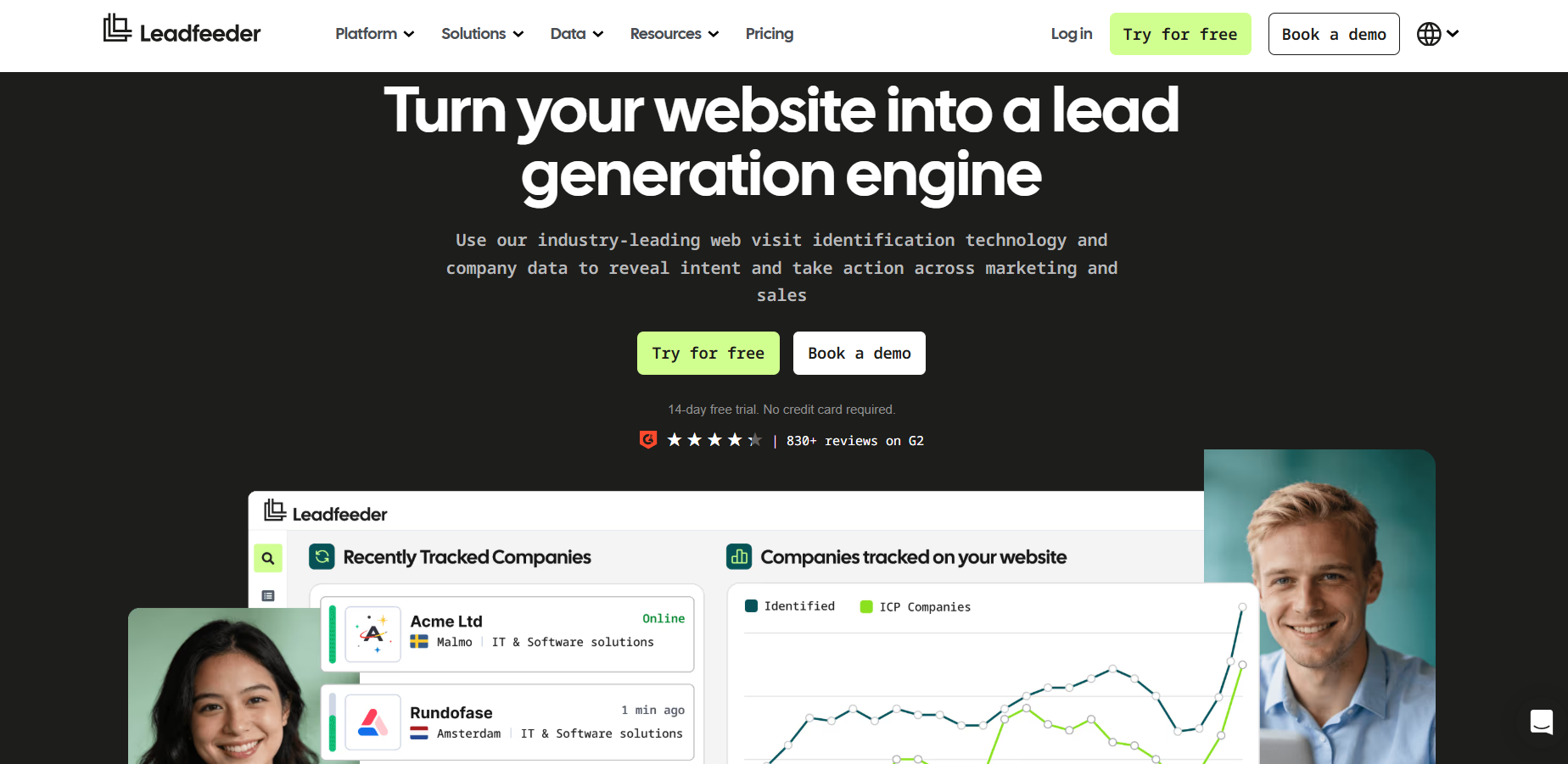
Leadfeeder homepage
This image shows the Leadfeeder homepage

If you’re already using Leadinfo, Leadfeeder will feel familiar, but more structured.

It solves the same core problem, identifying which companies visit your website

But the difference is in how much you can do after that.

With Leadinfo, I mostly used it to see visitor activity. 

With Leadfeeder, I could actually:

  • filter companies based on ICP
  • track long-term visitor behavior
  • prioritize accounts based on intent
  • push data directly into CRM workflows

It still relies on company-level identification (IP-based), just like Leadinfo.

But it adds more depth in terms of, filtering, scoring, and integrations.

So instead of just seeing traffic, you can organize and act on it better.

Also, it now sits under Dealfront, which means, access to a larger database, and better enrichment.

Leadfeeder vs LeadInfo: Quick Comparison

Feature Leadfeeder Leadinfo
Core use case Website visitor identification + lead prioritization Website visitor identification
Data level Company-level + some contacts Mostly company-level
Intent signals Yes (behavior + filters) Yes (basic behavior)
Filtering Advanced ICP + firmographic filters Basic filtering
Database 60M companies + 400M contacts Smaller dataset

Pros of Leadfeeder 

  • More advanced filtering and segmentation
  • Better CRM integrations and workflows
  • Access to large B2B database (via Dealfront)
  • Helps prioritize high-intent accounts

Cons of Leadfeeder 

  • Still mostly company-level (not full contact coverage)
  • Pricing increases as usage grows
  • Can feel complex for small teams
  • Requires setup to get full value

Leadfeeder Pricing

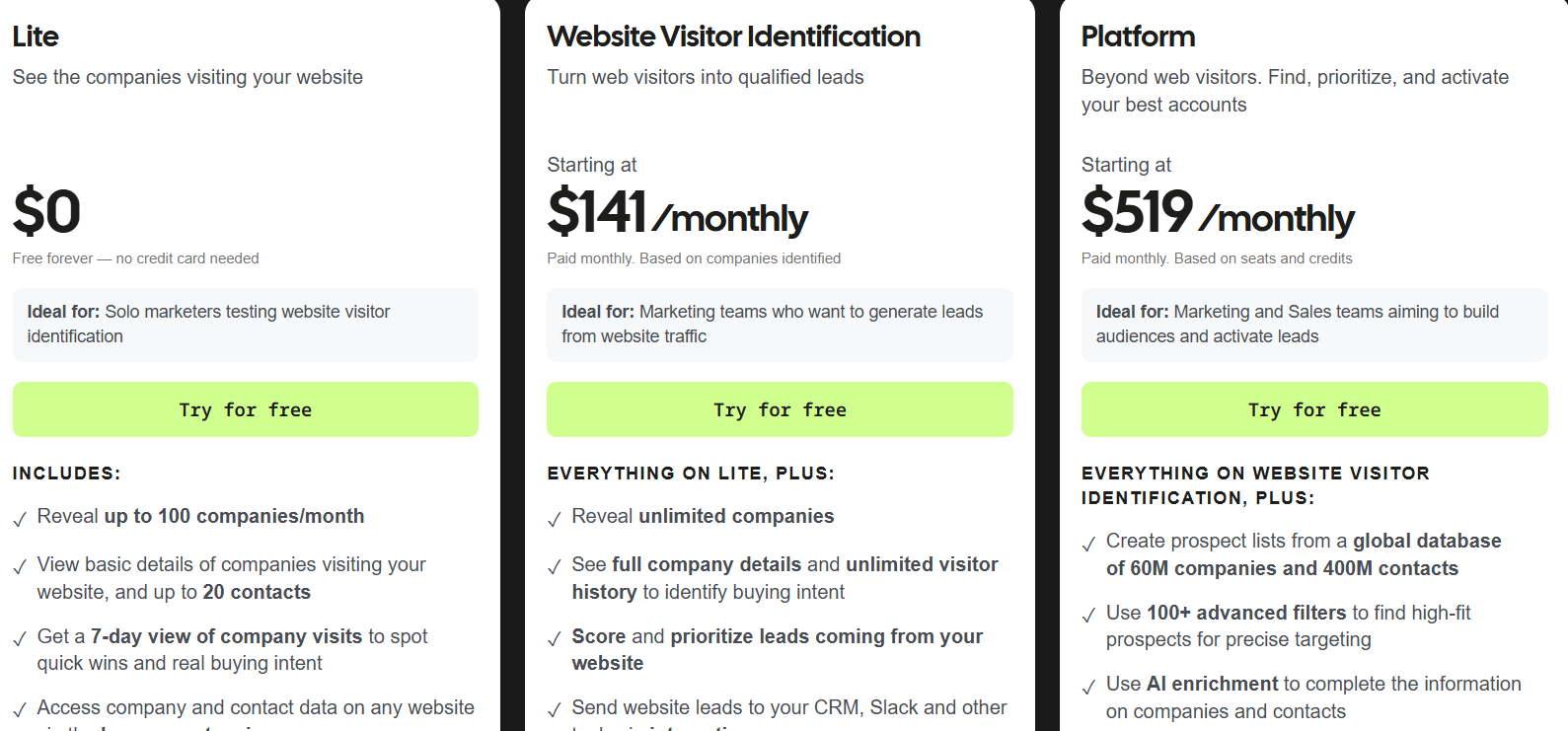
Leadfeeder pricing
This image shows the Leadfeeder pricing

Leadfeeder starts with a free plan, which I liked because you can actually test it properly.

  • Free → limited company reveals
  • Paid → starts around $141/month
  • Higher tiers → go $500+/month with full database access

What I noticed is that pricing scales based on:

  • how many companies you identify
  • how much data and features you unlock

It’s fair pricing if your strategy is to “turn website traffic into pipeline.”

3. ZoomInfo - Best for large outbound teams that need data at scale

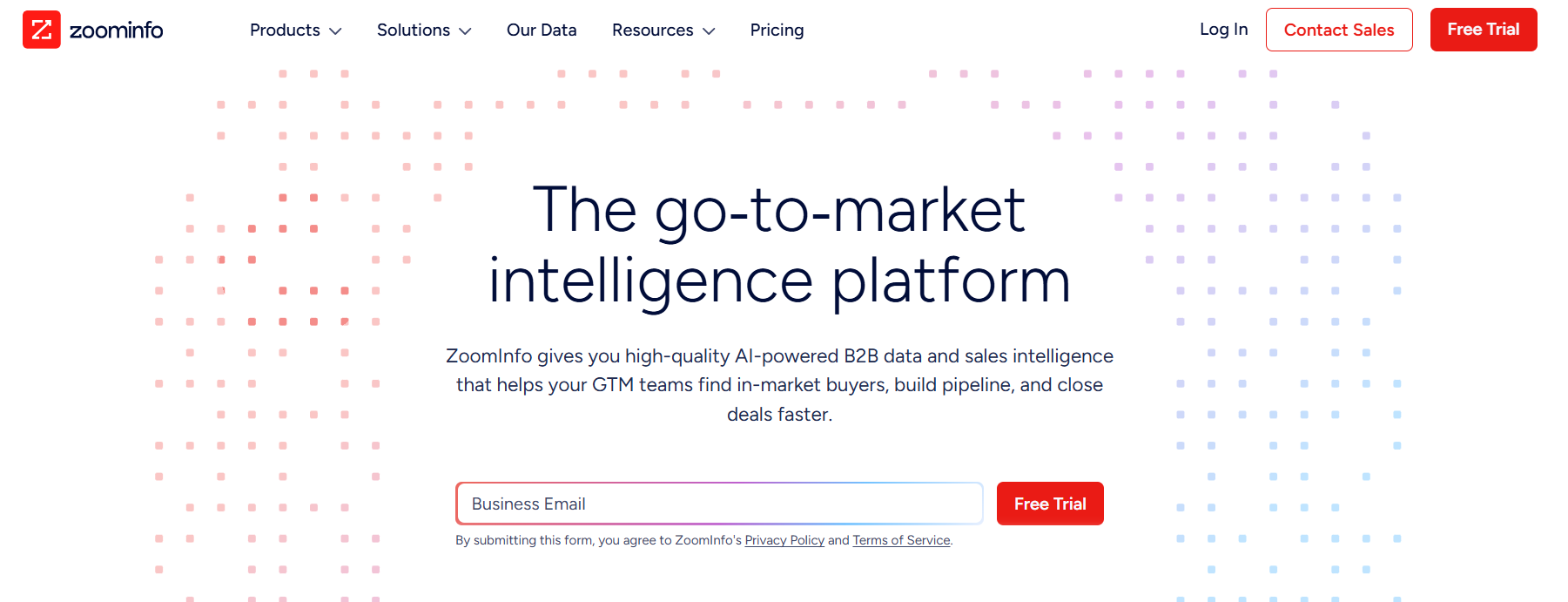
ZoomInfo homepage
This image shows the ZoomInfo homepage

ZoomInfo is a B2B database tool.

You use it to find companies and contacts directly, not just track visitors.

When I used Leadinfo, my workflow looked like this:

  • see a company visit
  • then go find contacts somewhere else

With ZoomInfo, I skipped that step. I could:

  • search companies using filters (industry, size, location)
  • pull decision-makers (job title, seniority)
  • get emails and phone numbers
  • and build lists in bulk

It’s built for volume. 

For example, if I want,  “VP Sales in SaaS companies (50–200 employees in the US),” I can get a full list instantly and start outreach.

That’s the key difference.

You’re not waiting for inbound signals.

You’re actively building your pipeline.

But this also means, It’s heavier, more expensive, and built for teams doing serious outbound.

ZoomInfo vs LeadInfo: Quick Comparison

Feature ZoomInfo Leadinfo
Core use case B2B data + prospecting platform Website visitor tracking
Data level Contact + company data Mostly company-level
Intent signals Yes (real-time buyer intent) Yes (website behavior)
Lead generation Yes (database + filters) Limited
Outreach readiness Yes (integrations + workflows) Limited
Scale Built for large teams SMB to mid-market

Pros of ZoomInfo 

  • Strong intent data and signals
  • Built for outbound at scale
  • Works well with CRM and workflows

Cons of ZoomInfo 

  • Expensive for small teams
  • Can feel complex to use
  • Requires setup and training
  • Pricing is not transparent

ZoomInfo Pricing

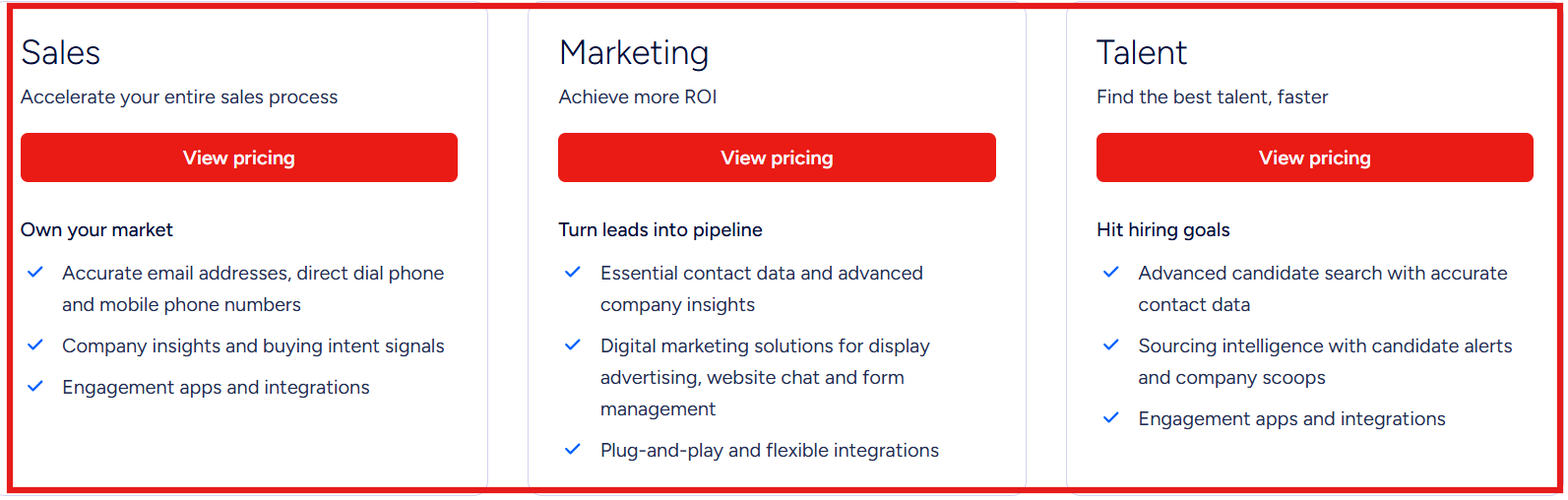
ZoomInfo pricing
This image shows the ZoomInfo pricing

ZoomInfo does not show fixed pricing publicly.

Pricing depends on:

  • number of users (licenses)
  • credits (data exports)
  • features and add-ons

From my experience, it’s powerful, but not cheap.

It works best if you run high-volume outbound.

If you’re a small team, it can feel heavy.

4. Warmly - Ideal for teams that want pipeline without manual work

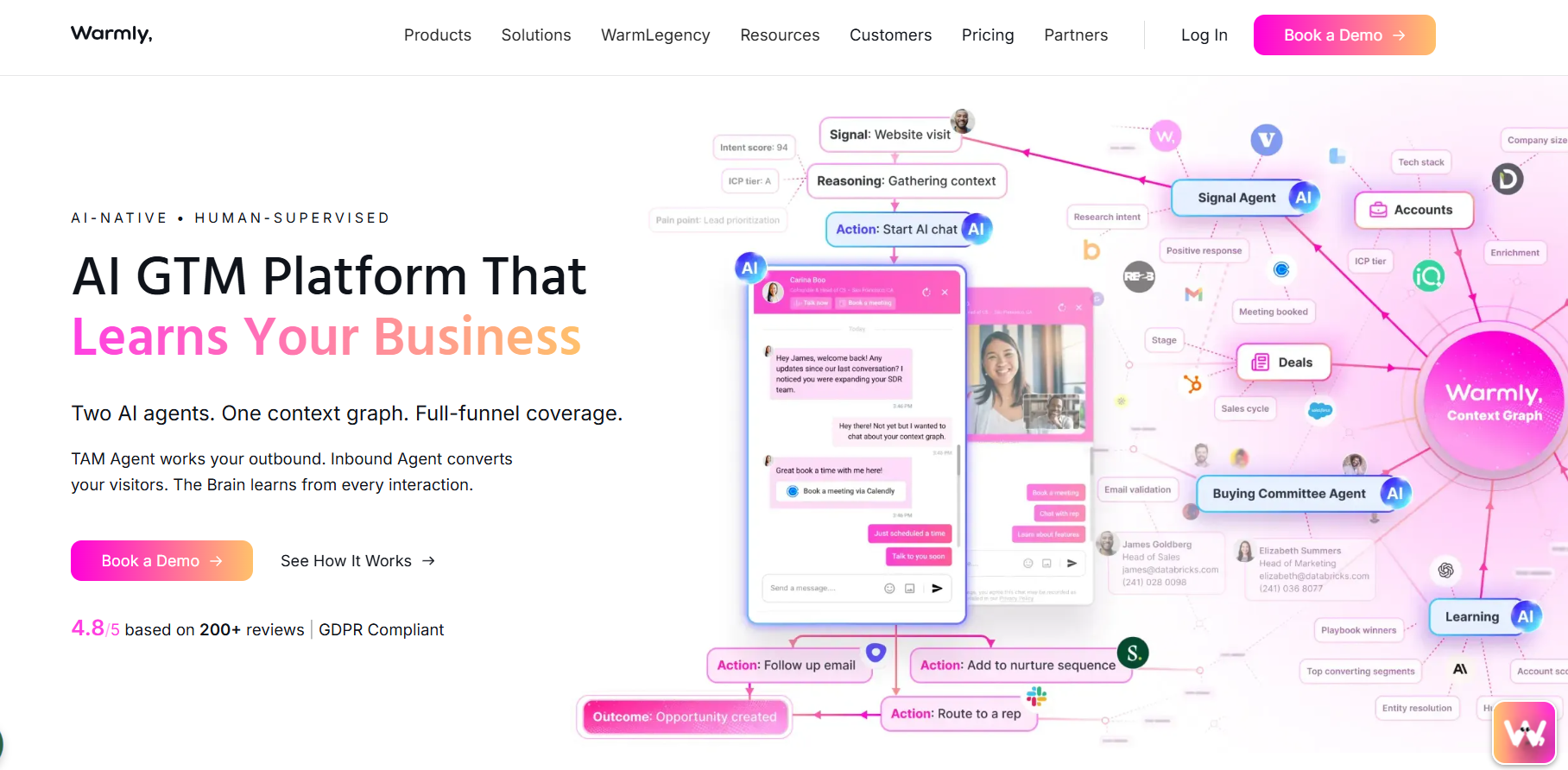
Warmly homepage
This image shows the Warmly homepage

Warmly is a full GTM platform that identifies, scores, and engages buyers automatically.

Instead of giving you a list of visitors or leads, it watches what’s happening across your pipeline and reacts to it.

For example:

  • if someone visits your pricing page multiple times
  • or engages with your content
  • or shows buying signals across channels

Warmly doesn’t just show that. It:

  • identifies the person
  • decides what to do next
  • and triggers actions automatically

That could be, starting a chat on your site, alerting your sales team, or sending a follow-up.

The interesting part is that everything shares the same context.

Warmly vs LeadInfo: Quick Comparison

Feature Warmly Leadinfo
Core use case Identify + engage + convert leads Identify website visitors
Data level Person-level + company Mostly company-level
Intent signals 1st, 2nd, 3rd party (real-time) Website behavior only
Engagement AI chat + email + routing Limited
Automation High (AI agents act automatically) Low
Use case Full GTM execution Visitor tracking

Pros of Warmly 

  • Person-level identification (not just company)
  • Real-time intent signals across multiple sources
  • Automatically engages visitors (chat, email, routing)
  • Combines inbound + outbound in one system
  • Reduces need for multiple tools

Cons of Warmly 

  • Expensive (starts high for most teams)
  • More complex than simple tracking tools
  • Requires setup to get full value
  • Overkill if you only need basic visitor tracking

Warmly Pricing

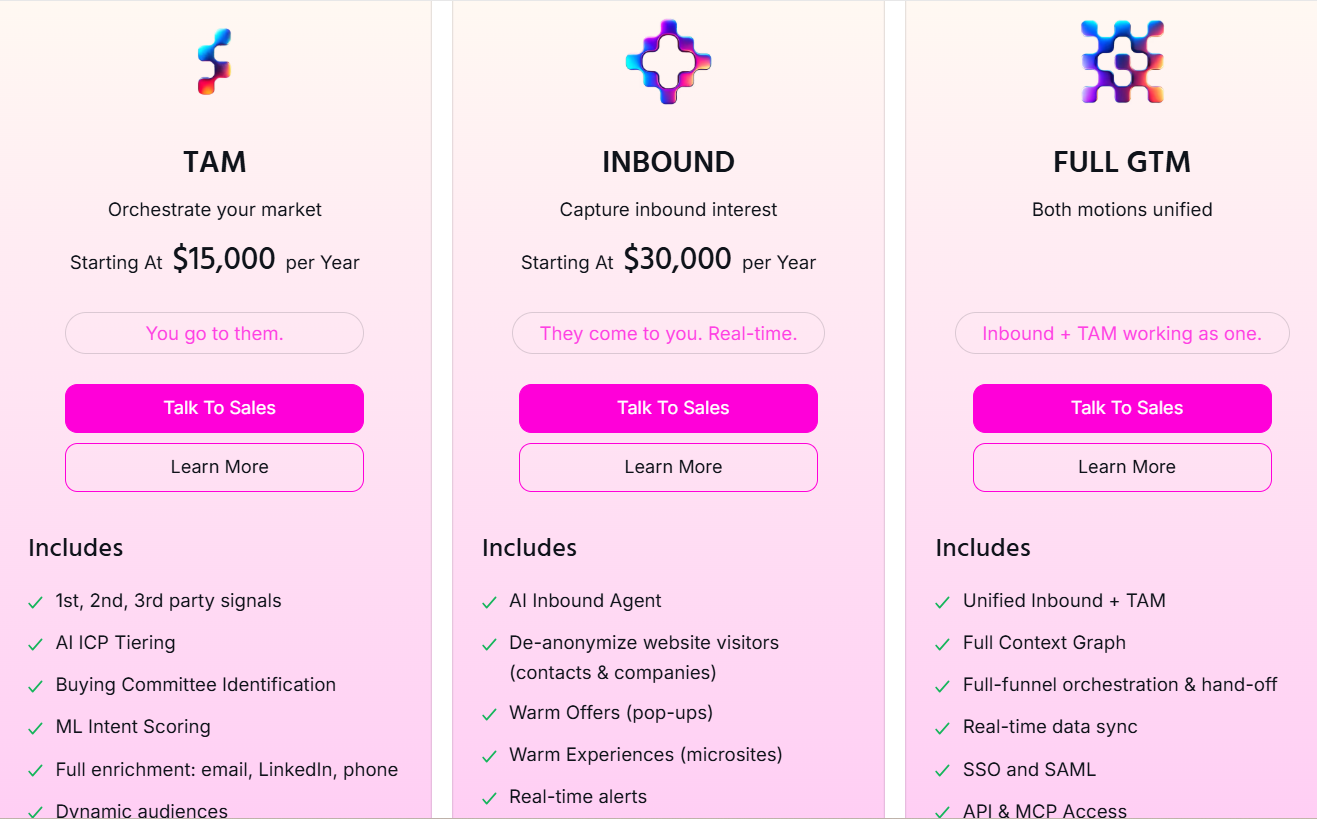
Warmly pricing
This image shows the Warmly pricing

Warmly pricing is not low-cost.

  • Starts around $15K/year (outbound)
  • $30K/year for inbound
  • Higher for full setup

This pricing only makes sense if you’re replacing multiple tools and workflows.

If your setup today includes:

  • intent tools
  • chat tools
  • enrichment tools
  • outbound tools 

Then Warmly can consolidate that.

But if you just need visitor identification, it’s too heavy and expensive for that use case.

5. 6sense - Built for predicting who will buy before they reach you

6sense homepage
This image shows the 6sense homepage

6sense is a revenue intelligence platform.

It tries to tell you who is likely to buy, even before they visit your site.

The biggest difference was it doesn’t start from traffic or lists.

It starts from signals happening across the internet. 6sense tracks things like:

  • what companies are researching
  • what topics they are reading
  • how their buying behavior is changing

Then it uses AI to:

  • score accounts
  • predict buying stage
  • and tell you when to reach out

So instead of reacting to activity, you’re working ahead of it.

It also connects data, intent signals outreach workflows, in one place.

This means sales and marketing are not guessing anymore.

They’re prioritizing accounts based on actual buying signals.

6sense vs LeadInfo: Quick Comparison

Feature 6sense Leadinfo
Core use case Predictive intent + revenue intelligence Website visitor tracking
Data level Company + contact + intent signals Mostly company-level
Intent signals Multi-source (large-scale) Website behavior only
Timing Predicts before visits Tracks after visits
Automation High (AI-driven workflows) Limited
Use case Enterprise GTM strategy Simple lead tracking

Pros of 6sense 

  • Combines multiple signals (web, intent, CRM) into one view
  • Prioritizes accounts using AI scoring, not guesswork
  • Helps sales focus only on high-intent accounts, not cold lists

Cons of 6sense 

  • Mostly account-level data, not always clear who the exact buyer is
  • Intent signals can sometimes feel broad or noisy
  • Takes time to set up and actually see results
  • Needs a proper RevOps setup to use it well
  • No built-in way to engage instantly (like chat or direct conversion)

6sense Pricing

6sense does not show pricing publicly.

You need to talk to sales.

From what I’ve seen, it usually starts around $30K–$50K/year and goes much higher for full setup.

You’re paying for:

  • predictive data
  • intent signals
  • full GTM system

It makes sense if you run ABM or large outbound teams

If you just need leads or visitor tracking, it’s too expensive for that use case.

6. Lead Forensics - Better for high-volume visitor identification

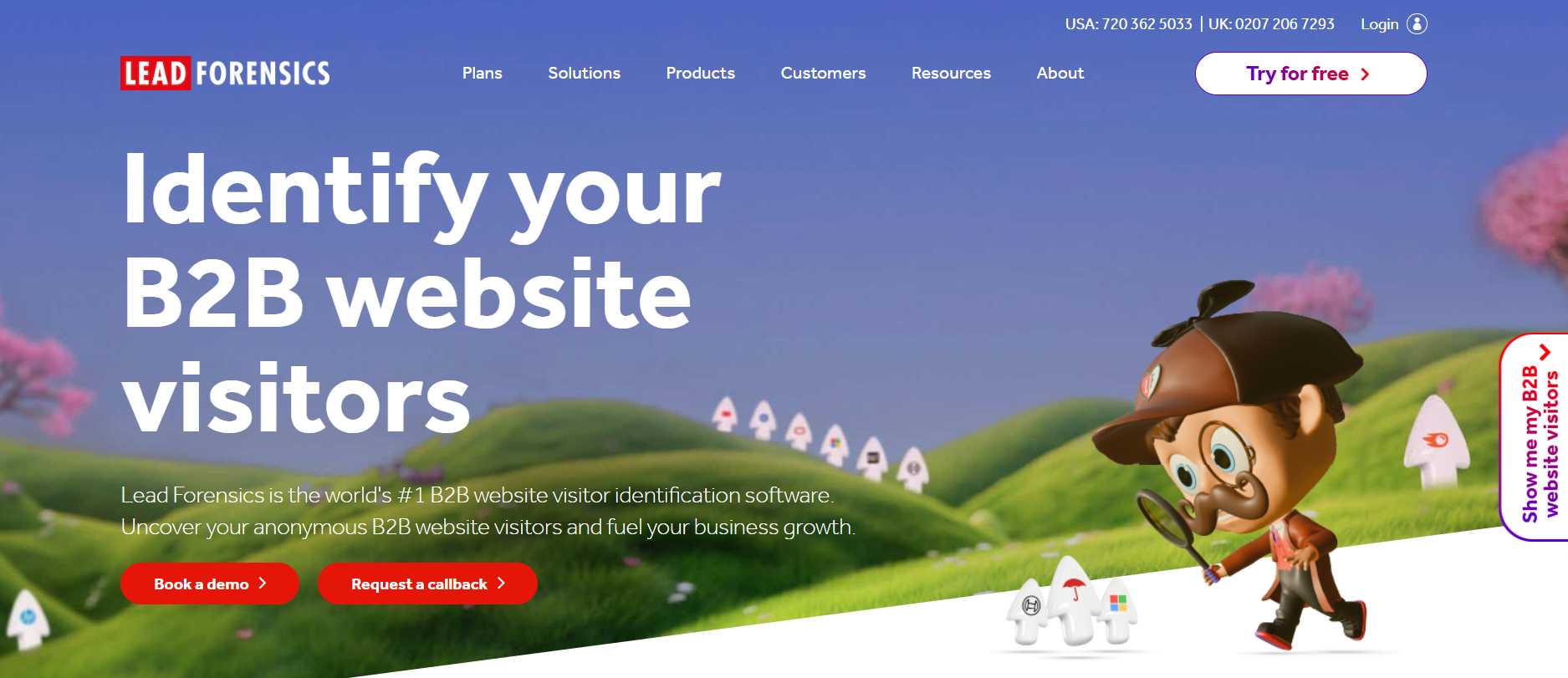
Lead Forensics homepage
This image shows the Lead Forensics homepage

Lead Forensics is a B2B website visitor identification tool that turns anonymous traffic into company data.

It takes your website traffic, matches IP data to companies, and pushes that into your system in real time.

What I liked is how consistent it is.

If you have traffic, it keeps identifying companies without much manual work.

But it’s still mostly company-level.

I could see which business visited, but not always the exact person behind it.

So for me, it worked more as a data layer, not a complete outbound solution.

Lead Forensics vs LeadInfo: Quick Comparison

Feature Lead Forensics Leadinfo
Core use case Website visitor identification (data-heavy) Website visitor identification
Data method IP matching + proprietary database IP matching
Data level Company-level + some contacts Mostly company-level
Real-time alerts Yes Yes
CRM integration Strong (automation-focused) Good
Ease of use More data-driven More UI-friendly

Pros of Lead Forensics

  • Strong IP-to-company matching engine for high traffic sites
  • Handles large volumes of visitors reliably
  • Real-time alerts help sales act quickly
  • Tracks repeat visits and engagement patterns

Cons of Lead Forensics

  • Still mostly company-level, not person-level data
  • Requires setup to fully use CRM workflows
  • Interface feels more functional than intuitive
  • Data accuracy depends on IP quality (VPNs, remote work issues)
  • No built-in outbound or enrichment layer

Lead Forensics Pricing

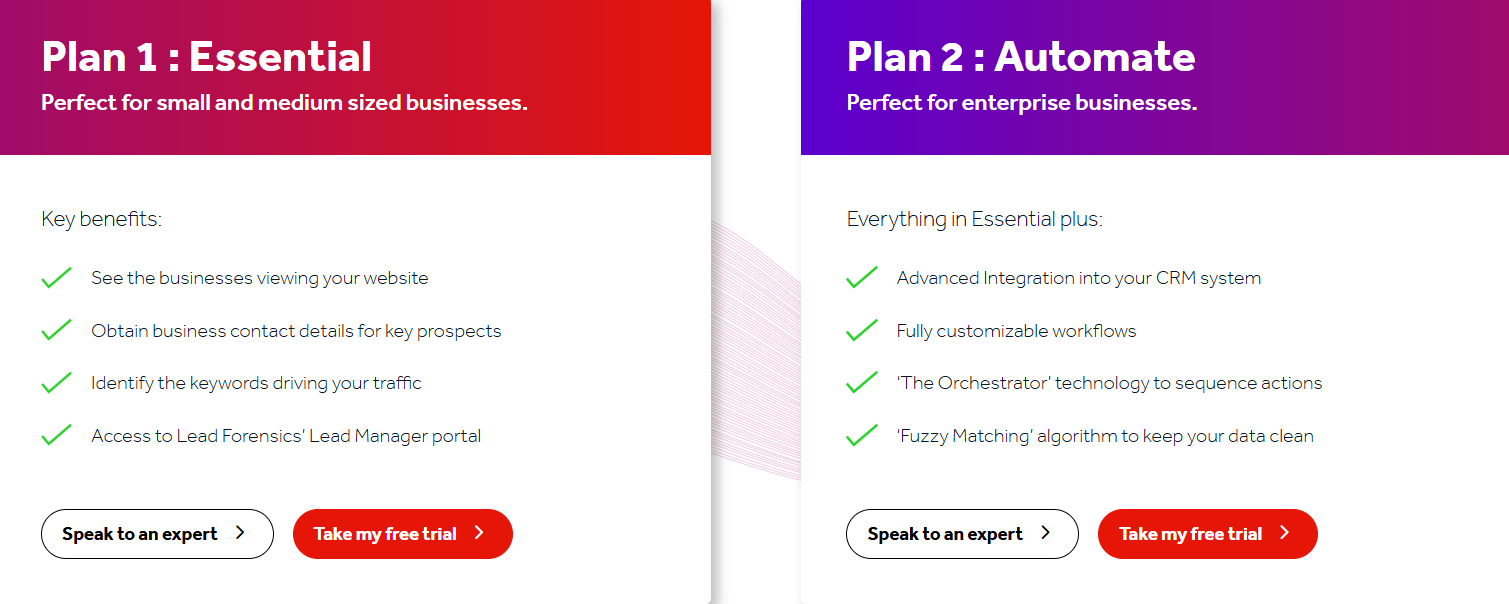
Lead Forensics pricing
This image shows the Lead Forensics pricing

Pricing is not public.

You need to request a demo.

From what I’ve seen, it’s:

  • mid to high pricing depending on traffic volume
  • separate plans (Essential, Automate) based on features

You’re paying for consistent visitor identification at scale.

7. Clearbit - Better for real-time data enrichment inside your CRM

Clearbit homepage
This image shows the Clearbit homepage

Clearbit is a B2B data enrichment tool that fills in missing company and contact data automatically.

When I used Clearbit, it felt more like something that sits inside your stack and improves your existing data.

For example:

  • someone signs up → Clearbit enriches the record instantly
  • you get company size, industry, tech stack, etc.
  • your CRM becomes much cleaner and more usable

It also has “Reveal,” which identifies companies visiting your site using IP data, similar to Leadinfo, but that’s not its core strength.

For me, Clearbit worked best when I already had leads and needed better context to qualify and route them.

Clearbit vs LeadInfo: Quick Comparison

Feature Clearbit Leadinfo
Core use case Data enrichment + lead context Website visitor identification
Data level Contact + company enrichment Mostly company-level
Website tracking Yes (Reveal) Yes
Strength CRM data quality Visitor identification
Use case Improve existing leads Discover new visitors

Pros of Clearbit 

  • Real-time enrichment improves CRM instantly
  • Adds 100+ data points to each lead
  • Helps with lead scoring and routing
  • Works well with forms (shorter forms, more data)
  • Strong fit if you already use HubSpot

Cons of Clearbit 

  • Not a full visitor tracking tool like Leadinfo
  • Doesn’t directly generate outreach-ready lists
  • Works best only if you already have inbound leads
  • Pricing is not transparent

Clearbit Pricing

Clearbit is no longer a standalone tool.

It now works as a HubSpot add-on (Breeze Intelligence).

  • Starts around $45–$50/month for 100 credits
  • But you also need HubSpot → total minimum is ~$60–$75/month
  • Credits reset monthly (no rollover) 

You’re not just paying for Clearbit. Y

ou’re paying for HubSpot + credits + usage.

So the real cost depends on:

  • how many leads you enrich
  • which HubSpot plan you’re on

If you’re already using HubSpot, it fits well.

If not, it becomes expensive very quickly.

8. CommonRoom - Best for unifying buying signals across channels

CommonRoom homepage
This image shows the CommonRoom homepage

CommonRoom is a customer intelligence platform that brings all your buying signals into one place.

Instead of only tracking website visitors, it tracks signals from:

  • product usage
  • website visits
  • social activity
  • community (GitHub, Slack, etc.)

Then it ties everything back to a single person and account using identity resolution.

What stood out to me is how it removes guesswork.

Normally, signals are scattered across tools.

Here, everything is unified, scored, and pushed to your team as “who to contact next.”

It also uses AI agents to:

  • capture signals
  • enrich data
  • and trigger outbound actions

So instead of manually researching accounts, you’re working from a ready list of high-intent prospects.

For me, this felt less like tracking and more like decision-making support for GTM teams.

Common Room vs LeadInfo: Quick Comparison

Feature Common Room Leadinfo
Core use case Signal aggregation + pipeline intelligence Website visitor identification
Data level Person + account (identity resolution) Mostly company-level
Intent signals Multi-source (1st, 2nd, 3rd party) Website behavior only
Lead generation Yes (signal-based prospecting) Limited
Automation AI agents for scoring + outbound triggers Basic workflows

Pros of CommonRoom 

  • Combines all buying signals in one place (website, product, social, community)
  • Strong identity resolution (connects signals → real person)
  • AI-driven prioritization (who to contact next)
  • Works well for PLG + community-led growth teams
  • High-quality enrichment with waterfall matching

Cons of CommonRoom 

  • Pricing tied to contacts + seats → unpredictable cost
  • No built-in outreach (you still need Salesforge/Outreach etc.)

CommonRoom Pricing

CommonRoom pricing
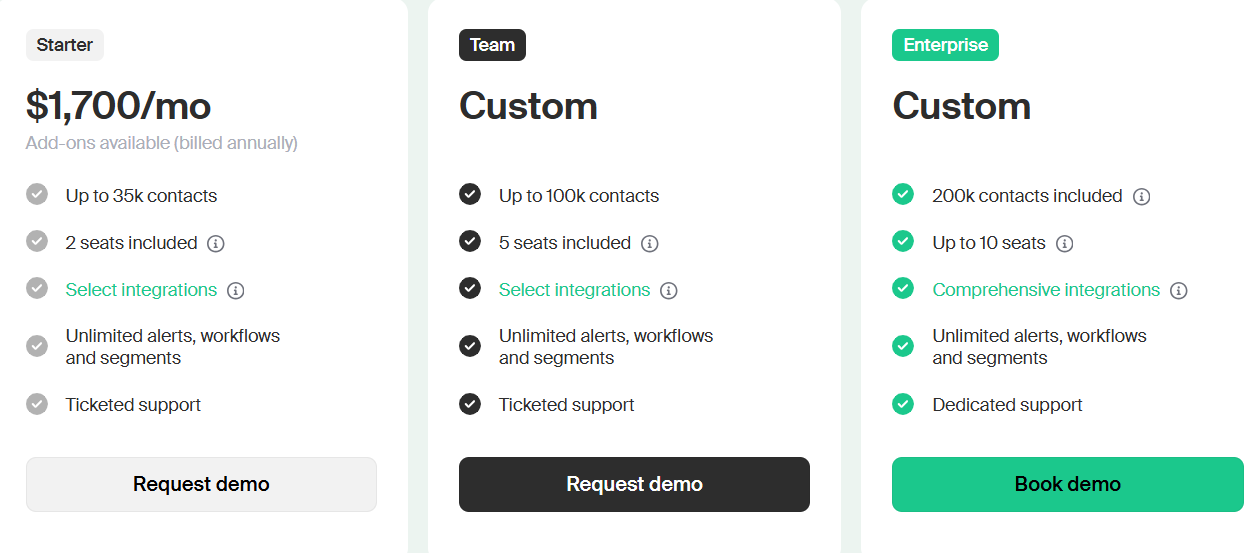
This image shows the CommonRoom pricing

CommonRoom pricing is not public.

You need to request a demo.

You’re paying for signal aggregation, enrichment and prioritization

9. Albacross - Better for teams that want tracking and outreach in one place

Albacross homepage
This image shows the Albacross homepage

Albacross is a B2B website visitor identification platform with built-in outreach.

It picks up companies visiting your site, looks at their behavior and external signals. 

It then tries to move them forward without you doing everything manually. 

What I found different is that it doesn’t stop at showing data.

It actually tries to act on it.

For example, once a company shows intent, it can trigger email or LinkedIn sequences automatically. 

So instead of exporting data and moving it into another tool, the next step already happens inside the same system.

That makes it useful if you don’t want to manage multiple tools.

But it also means you’re working within its limits, especially around contact credits and outreach flexibility.

 Albacross vs LeadInfo: Quick Comparison

Feature Albacross Leadinfo
Core use case Identify + auto-engage leads Identify visitors
Data level Company + limited contacts Mostly company
Intent signals On-site + off-site Website only
Outreach Built-in (email + LinkedIn) Add-on / limited
Workflow All-in-one Multi-tool setup

Pros of Albacross 

  • You don’t need a separate outreach tool
  • Auto-engagement saves manual work
  • Good intent segmentation (not just page views)
  • Works well for small GTM teams without SDRs

Cons of Albacross 

  • Contact data is still limited by credits
  • Less control vs using separate tools
  • Gets expensive as usage grows
  • Not ideal if you only want clean tracking 

Albacross Pricing

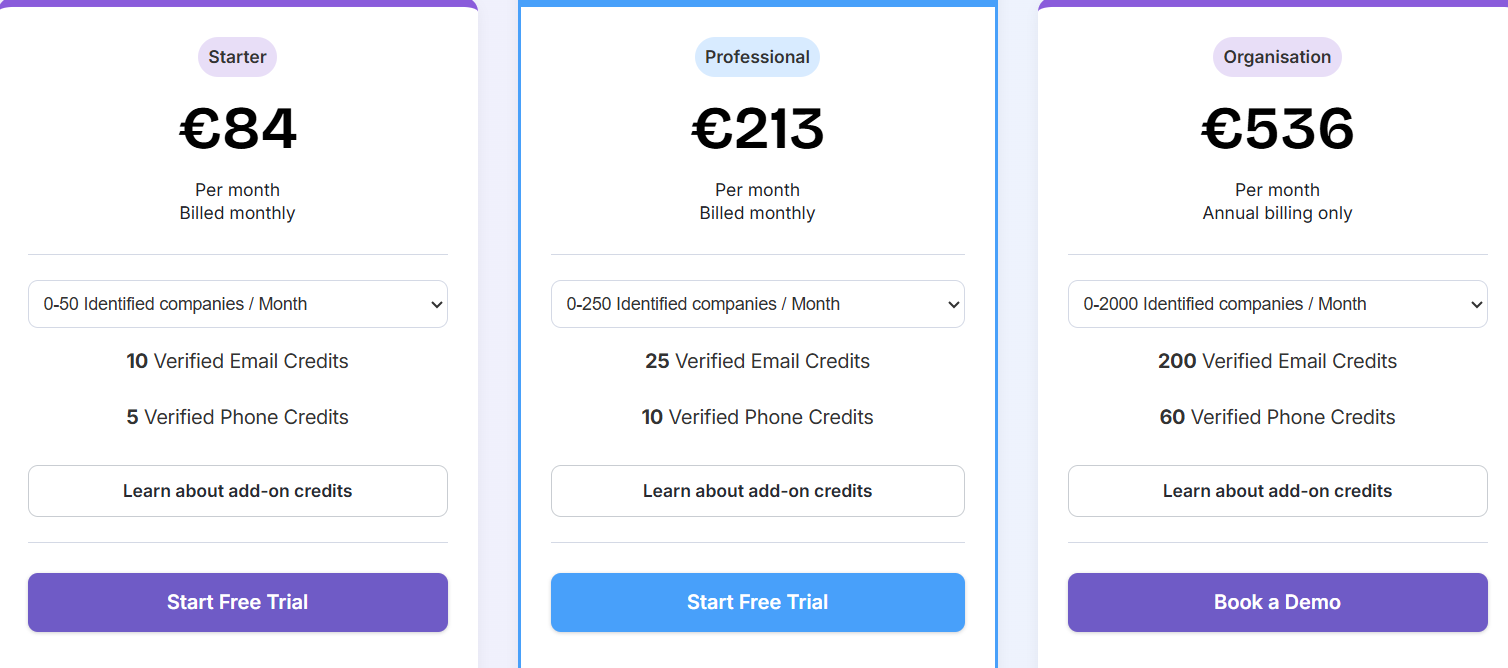
Albacross pricing
This image shows the Albacross pricing

Here’s a quick look at Albacross pricing:

  • Starter: €84/month
  • Professional: €213/month
  • Higher plans: €500+/month

But the real cost depends on how much you use it. Each plan limits:

  • how many companies you can identify
  • how many emails and phone numbers you get

So the base plan works only if your traffic is low.

For example, if your site gets consistent traffic, you’ll likely hit limits and need to upgrade quickly.

10. Cognism - Better for getting accurate contact data 

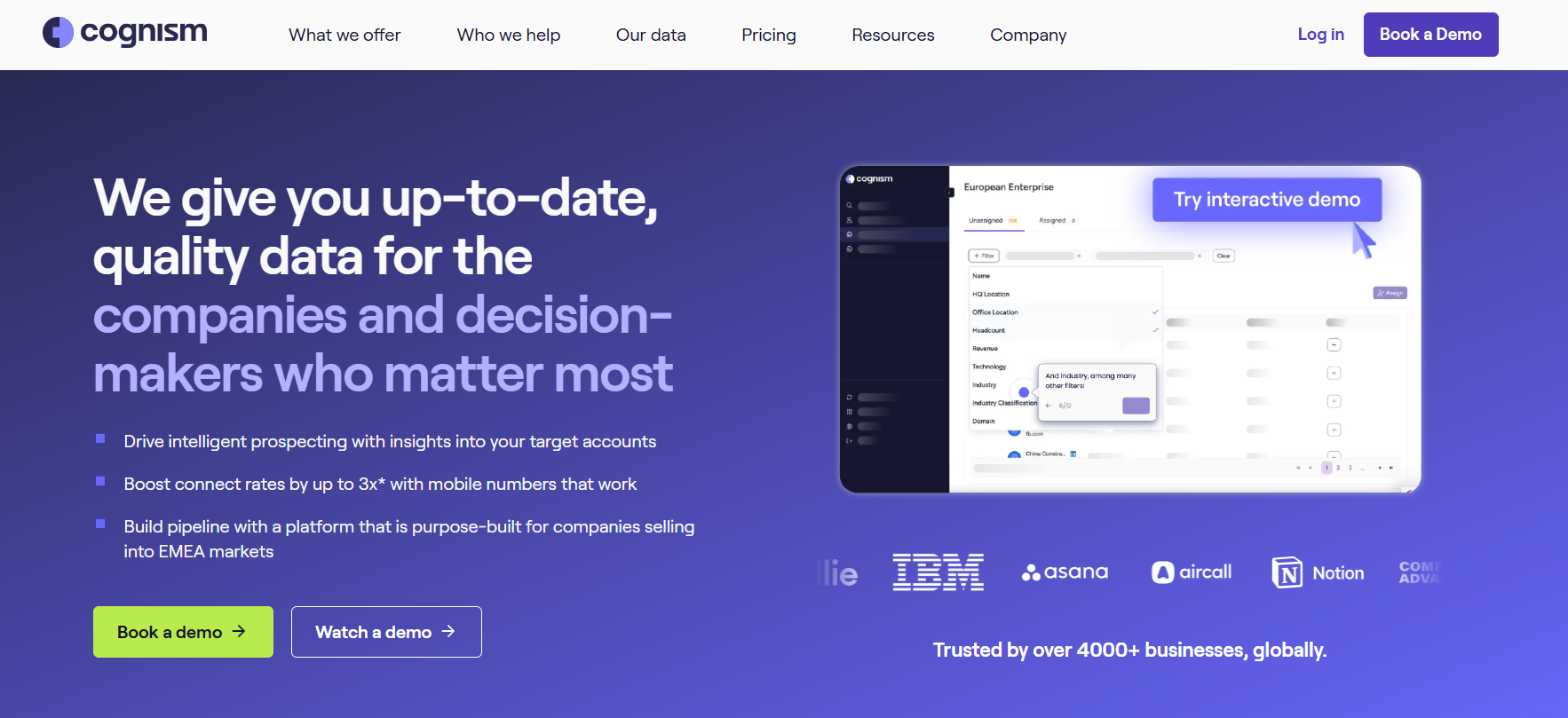
Cognism homepage
This image shows the Cognism homepage

Cognism is a B2B data provider focused on verified contact data and compliance.

When I compared it with Leadinfo, the difference was obvious.

Leadinfo shows which companies are visiting your site.

Cognism gives you direct access to decision-makers inside those companies. 

It provides emails, phone numbers, and signals, so you can actually reach out without guessing.

What stood out to me is the data quality.

Their “Diamond Data” is phone-verified, so you’re not just collecting contacts, you’re actually reaching people who pick up.

I found this especially useful when:

  • I already knew my ICP
  • I didn’t want to depend only on inbound traffic
  • I needed reliable contact data for outbound

So instead of waiting for visitors, you can build pipeline proactively.

Cognism vs LeadInfo: Quick Comparison

Feature Cognism Leadinfo
Core use case Contact data + sales intelligence Website visitor identification
Data level Contact-level (emails, phones) Mostly company-level
Intent signals Yes (hiring, funding, intent) Website behavior only
Lead generation Yes (database + prospecting) Limited
Best for Outbound teams Inbound tracking

Pros of Cognism 

  • High-quality phone-verified contact data
  • Helps reach actual decision-makers, not just companies
  • Includes signals like hiring, funding, intent
  • GDPR-compliant data sourcing

Cons of Cognism 

  • No website visitor tracking (doesn’t replace Leadinfo)
  • Pricing is high and not public
  • Works best only if you already know your ICP
  • No built-in outreach (needs another tool)

Cognism Pricing

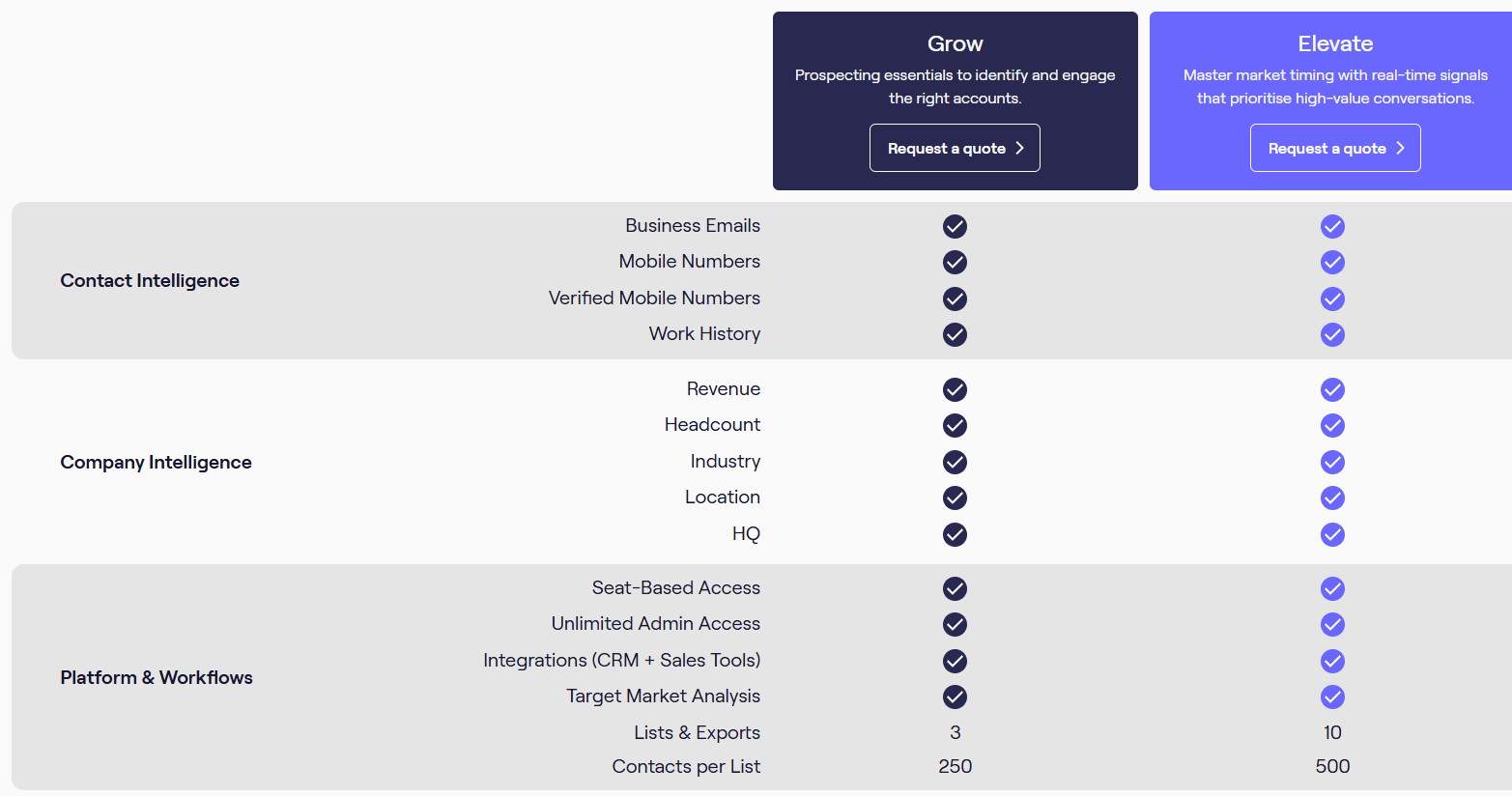
Cognism pricing
This image shows the Cognism pricing

Cognism doesn’t show pricing publicly.

You need to talk to sales.

It’s positioned as a premium data provider.

If bad data is your problem, it’s worth it.

But if you’re just starting or testing, it’s probably too expensive.

Personalized Outbound Strategy

Get The Right Outbound Strategy In Minutes

Enter your email to get a custom plan & stack recommendation for your business

It's being carefully crafted by AI

Please check your mailbox in 5 minutes

Which Leadinfo Alternative Should You Choose?

The right alternative depends on what you’re trying to fix.

  • For better tracking → Leadfeeder, Lead Forensics
  • For intent + signals → 6sense, Warmly, Common Room
  • For contact data → Cognism, ZoomInfo

But most tools stop at insights.

You still need to find contacts and start outreach.

That’s where Leadsforge stands out.

Instead of waiting for visitors, you can define your ICP and start reaching out with ready-to-use data.

If your goal is not just to track visitors but to actually build pipeline, Leadsforge is worth trying.

Sign up for Leadsforge and get 100 free credits!